Introduction
The Elvis Performance That Never Was—and Why Dolly Parton’s “Jolene” Still Makes Us Imagine It
Some songs arrive with a grand introduction. Others need only a few guitar notes to bring an entire room to attention. Dolly Parton’s “Jolene” belongs to that second, remarkable category. Before the story has properly begun, its circling guitar figure creates a feeling of unease: something precious is slipping away, and the person singing has very little time to stop it. For listeners who have carried this recording through the years, its power remains wonderfully undiminished. Familiarity has never quite softened its urgency.
At the center of “Jolene” is a decision that gives the song its enduring emotional force. The narrator does not hide behind pride. She addresses the person she fears with an honesty that is almost uncomfortable to overhear. There is admiration in her description, anxiety in her appeal, and a quiet awareness that love cannot always be protected through determination alone. Parton makes those feelings clear without crowding the song with explanations. Her storytelling trusts us to understand what remains unsaid.
Listen closely to Dolly Parton’s voice, and the balance becomes even more striking. Her tone is bright and unmistakable, yet the performance carries a persistent thread of worry. She does not need to overwhelm the arrangement to make the situation feel serious. Instead, the steady motion of the accompaniment gives her pleading a sense of forward momentum. The music keeps moving while the narrator seems trapped inside a single, unresolved fear. That tension is one reason the recording continues to invite such attentive listening.
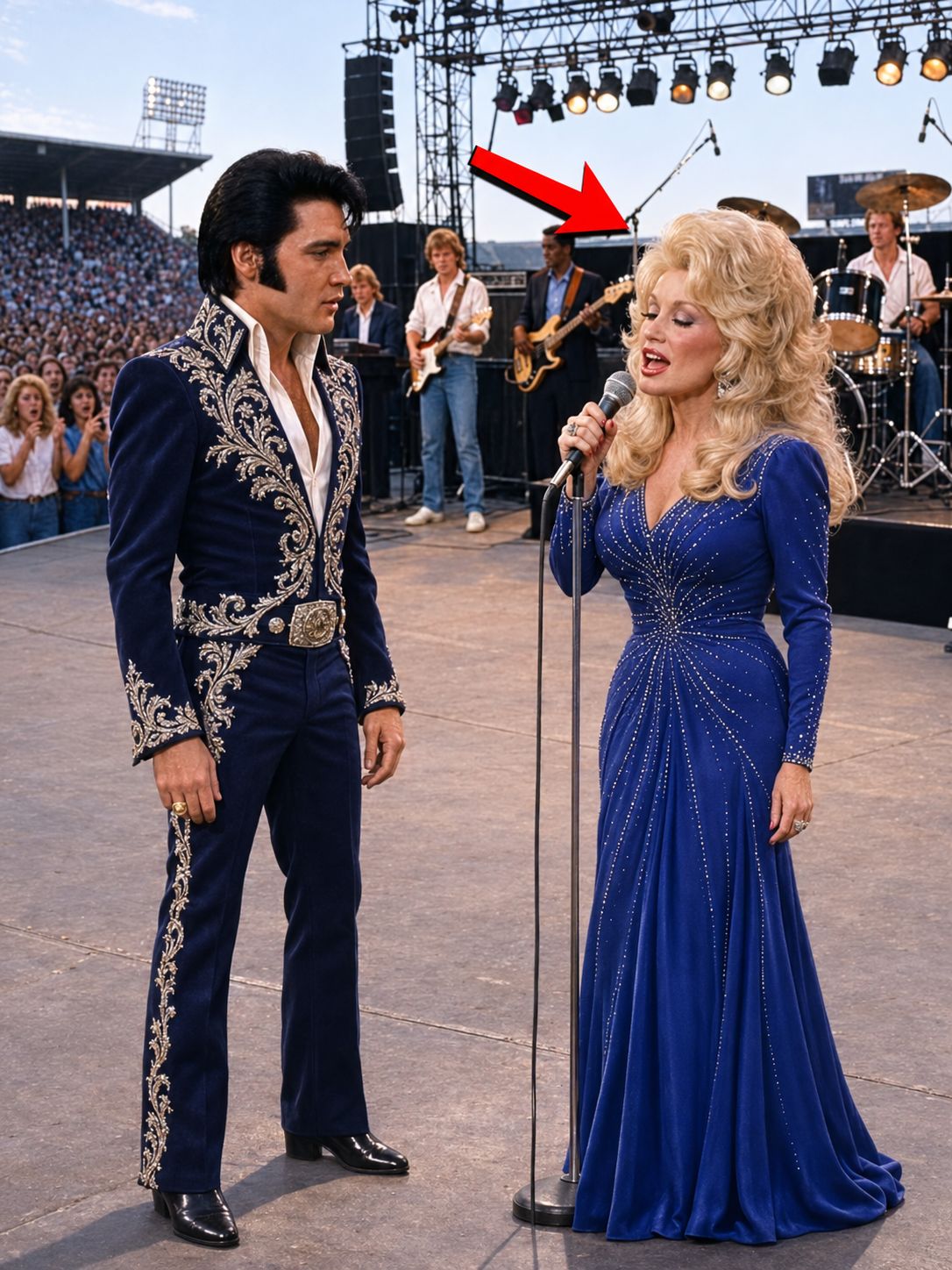
It also helps explain why the thought of Elvis Presley singing “Jolene” can capture the imagination. As a musical possibility, it raises an intriguing question: what might a deeper voice, shaped by gospel phrasing and dramatic ballad singing, reveal within Parton’s tightly drawn story? One can imagine a slower approach bringing different shadows to its melody. But that is an exercise in interpretation, rather than evidence of a lost performance. The song gives listeners room to imagine another voice without requiring an invented episode to establish its importance.

The documented connection between these artists concerns another Parton composition, “I Will Always Love You.” In her own account, Presley wanted to record the song, but the proposed arrangement required her to surrender a share of its publishing. She declined. That difficult decision offers a compelling glimpse of the songwriter behind the familiar warmth: someone who could deeply admire a performer while protecting the work she had created.
Returning to “Jolene” with that understanding makes Parton’s achievement feel richer. Here is a writer capable of giving a narrator profound vulnerability while exercising considerable resolve in her own professional life. The emotional openness of the song is an artistic accomplishment, carefully expressed through melody, rhythm, and economical language.
For those of us who value songs that grow more meaningful with experience, “Jolene” offers something lasting. Beneath its memorable refrain lies a recognizably human moment: the struggle to speak plainly when the heart is frightened. Decades of listening have not exhausted that moment. Each time the guitar begins, Parton brings us close enough to hear it anew.