Introduction

Some musical traditions remain close to our hearts because they remind us of the people we were when we first heard them. A familiar harmony can bring back a Sunday afternoon, a family gathering, or the sound of a country radio playing in the kitchen. For listeners who treasure The Statler Brothers, that connection runs especially deep. Their blend of storytelling, humor, and beautifully balanced voices made audiences feel welcome. Now, Jack and Davis Reid are introducing another generation of their family to that same spirit of entertainment.
In their conversation with host Chip White on the Relatively Famous podcast, the young duo offer something more engaging than a formal account of their family tree. They laugh, trade stories, and explain how music gradually became their own calling. Jack is the son of Wil Reid and grandson of Harold Reid, while Davis is the son of Langdon Reid and grandson of Don Reid. Their fathers perform as Wilson Fairchild, making Jack and Davis part of a third generation finding its place onstage.
Yet the most appealing part of this interview is how naturally they discuss that inheritance. To an audience, their grandfathers belong to country music history. To them, these were beloved family members whose work happened to bring joy to countless strangers. That distinction gives their memories warmth. Their admiration grew through everyday closeness, through watching, listening, and seeing what it meant to give an audience a good evening.
Their partnership also had a wonderfully ordinary beginning. During the interview, they recall an early invitation to sing together at an elementary school talent show—an invitation that was firmly declined. One cousin was eager to perform; the other needed time to discover his enthusiasm. Davis describes how his early ambitions centered on basketball before playing the piano changed his direction. For anyone who has watched a child or grandchild find an unexpected passion, that part of their story will feel particularly familiar.
Their approach to performing combines country music, gospel, family harmonies, and comedy. They speak of their fathers as important role models, and their easy banter suggests how much they value the pleasure of entertaining. The matching outfits have a story of their own: admiration for earlier generations, a supply of their fathers’ old stage shirts, and a practical opportunity to save money. It is a funny detail, but it also reveals their willingness to embrace a recognizable stage presence.
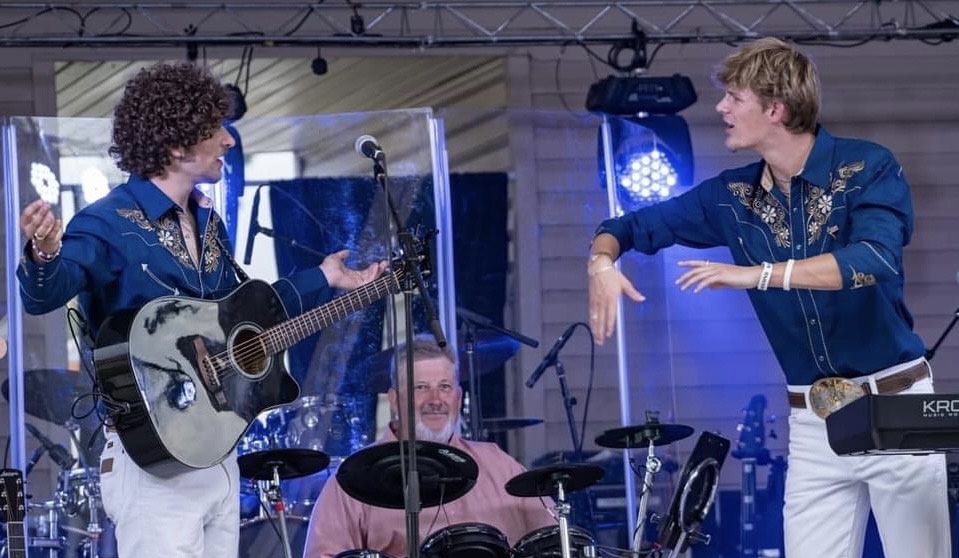
There is ambition beneath the laughter. In the interview, they discuss their first album, On the Road Education, describing a collection of eight original songs. They also explain how they exchange ideas, send voice memos, and seek honest advice. Those details matter because they show two young musicians working toward a voice of their own, with family experience available to guide them.
For longtime country listeners, this conversation offers a welcome introduction to Jack and Davis Reid. Their story invites us to consider how a musical legacy continues: through practice, affection, shared laughter, and the courage to put a new song before an audience. The familiar surname may encourage people to listen, but their warmth and determination give listeners a reason to stay.