Introduction
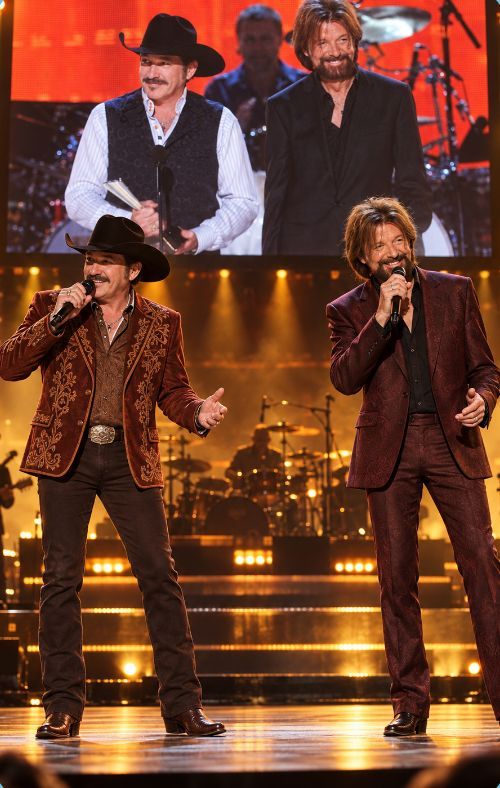
Thirty-five years after “Brand New Man” introduced a partnership that would help define an era of country music, Brooks & Dunn still know how to keep an audience guessing. In the interview provided, Kix Brooks and Ronnie Dunn move easily from laughter to thoughtful reflection, revealing a working relationship sustained by humor, honest disagreement, and a shared respect for the song.
For listeners who have followed them since the early days, the pleasure comes from recognizing that familiar spark. Their personalities remain distinct, and each seems perfectly aware of what the other brings to the stage.
The interview’s visit to Lafayette, Louisiana, offers a particularly warm illustration of how far their music has traveled. Welcomed by The Lost Bayou Ramblers, the duo hear “Neon Moon” performed in French. A song so closely associated with their own voices suddenly arrives through another musical tradition, carrying its familiar loneliness into a different language.
It is a lovely choice. “Neon Moon” has the emotional clarity that allows a country song to become part of people’s lives. Its setting is specific, but its feeling is widely understood: the ache of missing someone, the comfort of a familiar place, and the small rituals that help a person get through the evening. Hearing it interpreted by Louisiana musicians brings that reach into focus.
Yet some of the interview’s most revealing moments concern what happens before anyone steps onto a stage.

Asked about their chemistry, Dunn points to unpredictability and the tension that can exist within a long partnership. Brooks adds that, across their years together, they have disagreed without raising their voices at one another. That distinction offers a thoughtful glimpse into their endurance. Strong opinions remain part of the arrangement, alongside the restraint required to keep working together.
Their discussion of a new record makes that process especially vivid. Both men write. Both care deeply about their songs. Both would naturally like their own work to make the final selection. They describe exchanging material, critiquing each other, and reaching the uncomfortable but necessary moment when personal attachment must give way to an honest judgment about quality.
For anyone who has maintained a long professional partnership, that conversation will sound familiar. Experience does not remove the need to compromise. It can, however, teach people why the work deserves it.
Their mutual admiration also emerges with refreshing simplicity. Dunn praises Brooks’s ability to connect with a crowd and make a large performance feel personal. Brooks, with characteristic humor, points to Dunn’s singing. Together, those observations explain much of their appeal: an expressive voice and an instinctive entertainer, each giving the other room to do what he does best.
The interview also captures the way their audience now stretches across generations. The reporter recalls attending a Brooks & Dunn concert with his parents as a teenager, then returning with those same parents, his partner, and friends. That small family detail says something meaningful about the life of these songs. Music once introduced by a parent can eventually become music that brings everyone back together.
Perhaps the most affecting exchange comes near the end, when the conversation turns to whether joy or pain produces better songs. Brooks suggests that joy can be harder to write. Dunn speaks of leaving a little light at the end of the tunnel.
That sentiment gives this anniversary reflection its heart. Brooks & Dunn still full of surprises 35 years after “Brand New Man” release is more than an appealing premise for an interview. The surprise lies in their continuing curiosity: about songs, about audiences, and about what the two of them might still create together. Their history gives listeners plenty to remember. Their conversation gives those listeners a reason to keep listening.