Introduction
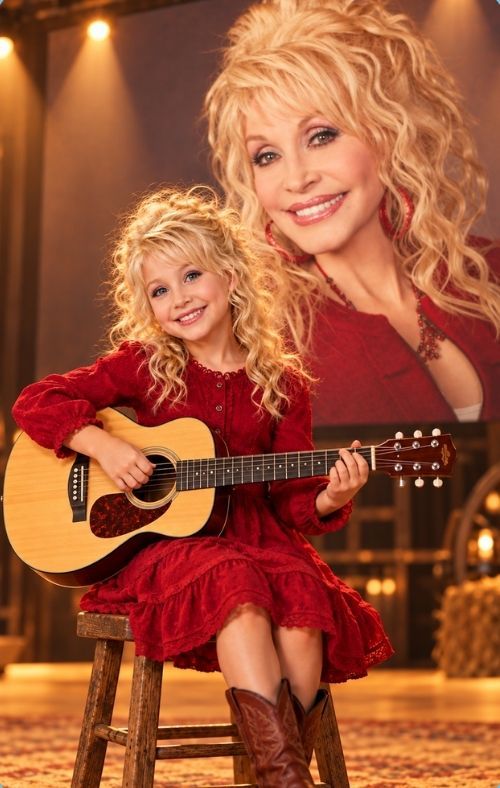
A familiar smile can bring a song back before a single note is played. A sweep of golden hair, an unmistakable sparkle, a face that recalls someone whose music has accompanied us for years—sometimes that is all it takes. The idea of an AI-generated girl who resembles Dolly Parton draws its emotional power from that recognition. Beyond the technology lies a much older impulse: the wish to celebrate an artist whose songs have become part of our own lives.
Such an image should be understood as a digital tribute, rather than a real photograph of Dolly or a glimpse into her personal history. That distinction helps us appreciate the artwork honestly. Its purpose can be imaginative and affectionate, offering a visual expression of what listeners associate with her: warmth, determination, humor, and a remarkable ability to make a complicated feeling sound beautifully simple.
Yet a resemblance, however striking, cannot explain Dolly Parton’s enduring appeal. Her significance lives in the songs themselves. Consider “Coat of Many Colors,” a story in which a handmade garment carries a mother’s care and a child’s understanding of dignity. Its emotional strength comes from concrete details and an unguarded voice. Listeners do not need to have lived the same childhood to recognize the feeling at its center: being given something precious that the wider world fails to value.
Then there is “Jolene,” whose insistent musical pattern gives uncertainty an almost physical presence. Dolly’s delivery makes the narrator’s vulnerability immediate without turning it into a grand theatrical display. She understands how much a carefully placed word can carry. For listeners who have spent decades hearing popular music change around them, that economy remains deeply satisfying. The song trusts the audience to hear what lies beneath the surface.

“I Will Always Love You” reveals another aspect of her craft: the ability to hold affection and farewell within the same quiet statement. Its lasting emotional reach rests on a recognizable human difficulty—how to let someone go while preserving gratitude for what they have meant. Dolly’s songwriting gives that feeling room to breathe, allowing listeners to bring their own memories to it.
This is what makes an AI tribute potentially moving. A digital face may catch the eye, but the memories it awakens belong to the listener. Someone may remember a record playing in a family kitchen, a long drive with the radio turned low, or a song that offered comfort during an uncertain season. Music that never fades survives through these ordinary, deeply personal connections.
The most thoughtful tribute therefore invites us to listen again. Technology can imagine a face and recreate the outward signs of familiarity. Dolly Parton’s music offers something richer: stories shaped with compassion, melodies that welcome us back, and words that continue to find meaning as we grow older. The image begins the conversation; the songs give us a reason to stay.