Introduction
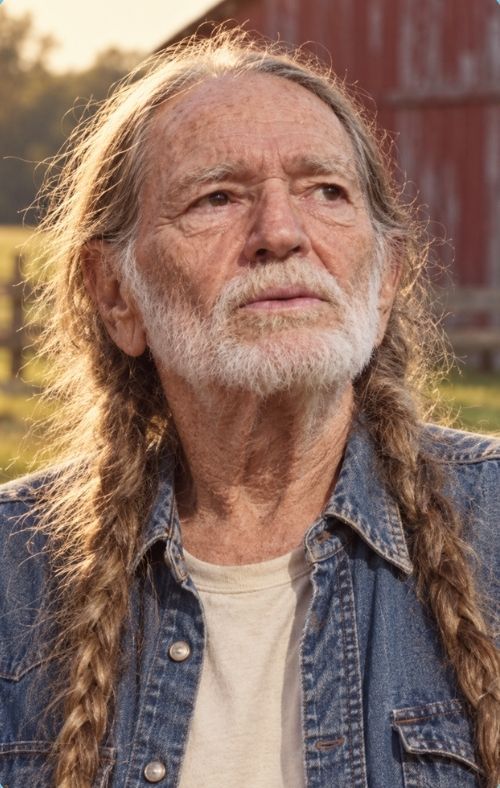
There comes a time when a familiar song begins to sound different—not because its melody has changed, but because we have. Friends become memories. Places we once knew seem quieter. The voices that accompanied our younger years acquire a tenderness we could not fully appreciate before. Willie Nelson’s “Last Leaf” belongs to that reflective landscape. It is a song about endurance, certainly, but also about the emotional weight of remaining when so much around us has slipped away.
Originally recorded by Tom Waits, “Last Leaf” became the opening track of Nelson’s 2024 album, Last Leaf on the Tree, produced by his son Micah Nelson. That meeting of generations gives the recording an especially meaningful setting: an elder artist considers the passing of time while working alongside someone who will carry part of his musical inheritance forward.
At the center of the song stands a wonderfully simple image: a solitary leaf holding to a tree after the others have fallen. Such an image needs little explanation. Older listeners may recognize in it the experience of watching a family change, losing cherished companions, or discovering that the world has moved beyond familiar customs. Yet the leaf also suggests determination. Its continued presence becomes a small, stubborn declaration that there is still life to be lived.
Nelson’s interpretation makes that balance between sorrow and resolve particularly affecting. His voice does not need to overwhelm the listener to establish its authority. The gentle irregularities of his phrasing, the weathered quality of his tone, and his conversational delivery invite close attention. He sounds like someone sharing a thought across a quiet room. The emotional force comes from the sense that he understands the song’s central question: what does it mean to keep going?
For listeners who associate Nelson with Kris Kristofferson and their shared musical world, “Last Leaf” can also invite thoughts of friendship and absence. This is an interpretation of the song’s resonance, rather than evidence that the recording was conceived as a specific tribute. Its imagery leaves room for listeners to remember their own companions, just as it encourages reflection on the artists whose work helped shape their lives.

That openness is one of the recording’s greatest strengths. A narrower song might tell us exactly whom to mourn or what conclusion to draw. “Last Leaf” allows grief, gratitude, humor, and resilience to occupy the same space. Survival is not presented as an uncomplicated victory. Remaining can be lonely. It can also be a privilege, bringing another opportunity to remember, to create, and to offer something worthwhile.
There is a quiet dignity in hearing an experienced singer inhabit those ideas without forcing them into a grand announcement. Nelson’s performance encourages us to value expression over display. The song’s modest scale gives its central image room to grow, until a single leaf seems capable of holding an entire lifetime of associations.
For anyone who has followed Willie Nelson’s music across the years, this recording offers a particularly intimate listening experience. For someone encountering him for the first time, it reveals how much feeling a singer can communicate through restraint. “Last Leaf” stays with us because its determination feels human: vulnerable to the weather, conscious of what has been lost, and still willing to greet another morning.