Introduction
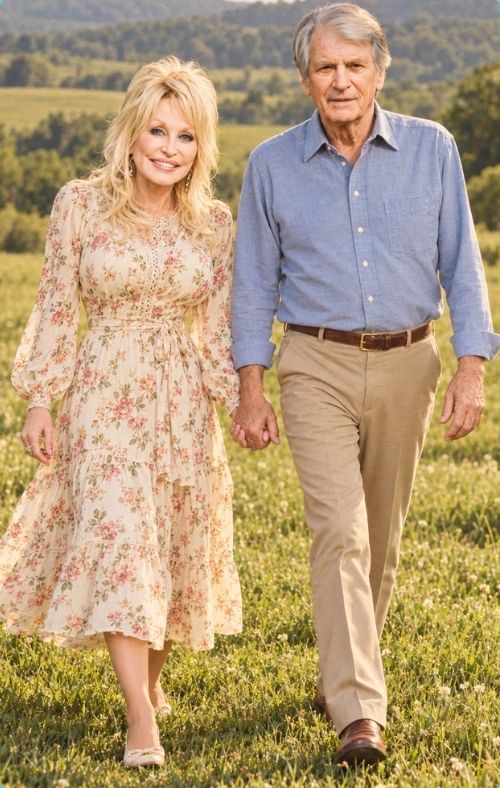
Before the applause, beyond the glitter, and far from the cameras, Dolly Parton shared a life with a man who had little interest in becoming famous. Carl Dean rarely appeared beside her in public, yet his place in her personal story was profound. For listeners who have followed Dolly through the years, their relationship offers a moving way to approach her music: behind that unmistakable voice was a woman who understood the value of laughter, companionship, and having someone waiting at home.
Their story began outside a Nashville laundromat in 1964, when Dolly was taking her first steps toward the career that would make her known around the world. They married on May 30, 1966, beginning a marriage that lasted 58 years, until Carl’s death on March 3, 2025, at the age of 82. These dates give the story its proper frame: more than six decades together, including almost fifty-nine years as husband and wife.
What makes their relationship so compelling is the ordinary life Dolly describes in the supplied interview excerpts. Her memories turn toward shared jokes, comfortable silences, picnics, and journeys along Tennessee’s back roads. There is something deeply recognizable in those details. Older listeners will understand that a lasting marriage often lives in small habits: the familiar conversation, the freedom to pursue separate interests, and the pleasure of being together without needing to fill every quiet moment.
That emotional understanding also helps explain the appeal of Dolly’s singing. Her voice can be bright and playful, but it remains especially persuasive when she allows uncertainty or tenderness to enter a phrase. Listening to “Here You Come Again,” the song mentioned at the beginning of the supplied material, one hears that balance between outward confidence and inward vulnerability. Its buoyant musical character gives the performance an inviting warmth, while Dolly’s delivery suggests how easily carefully arranged feelings can become unsettled. The connection here is interpretive: the song offers an emotional doorway into the discussion, rather than a literal account of her marriage.
“Jolene” provides a more direct link to the story of Dolly and Carl. Dolly has connected its inspiration partly to a bank teller whose attention toward her husband caught her notice. Yet the song’s enduring power reaches beyond that anecdote. Its narrator speaks with unusual openness, allowing listeners to hear fear without turning the performance into a display of anger. That restraint is central to its musical force. The listener is drawn close enough to recognize the vulnerability beneath the plea.
Following Carl’s death, “If You Hadn’t Been There” brought gratitude to the foreground. Released in March 2025 as a tribute to him, the ballad acknowledges the importance of his support throughout Dolly’s life. Heard alongside the relationship described in these interviews, it invites a thoughtful question: how much of a public achievement rests on encouragement that the public never sees?
For an audience that has lived through its own seasons of devotion, separation, and remembrance, this is where Dolly’s story becomes particularly affecting. We may admire the extraordinary career, but we recognize the quieter experiences beneath it. Her recollections of Carl give those experiences a human scale. They remind us why a familiar voice can grow more meaningful with time: we begin to hear the life behind it. Through companionship, gratitude, and memory, the music offers a place where private love can be understood without losing its dignity.