Introduction
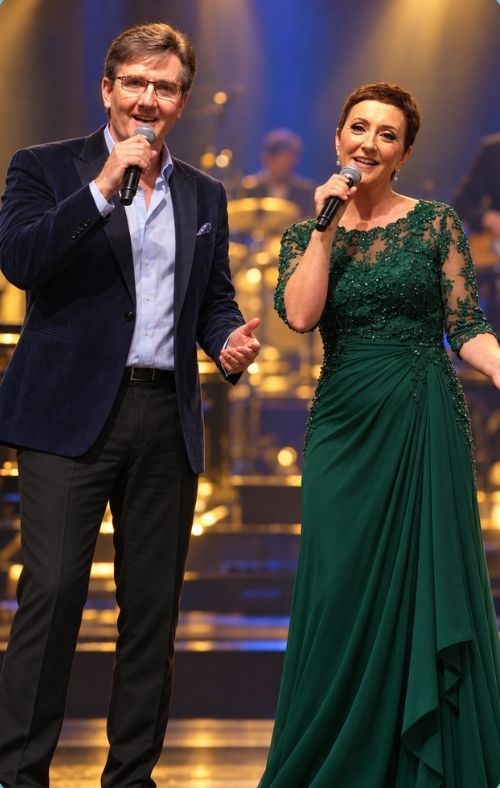
Some of the most revealing moments surrounding a singer’s life arrive without a melody. They emerge in conversation, when a carefully phrased question gives way to an unguarded memory. In this interview excerpt about Daniel O’Donnell, the memorable moment is a woman’s recollection of telling him, on only their second meeting, that she was going to marry him. What makes the story engaging is the combination of certainty, humor, and vulnerability with which she remembers saying it.
The interviewer initially describes the occasion as a second date. She gently corrects that description, explaining that it was the second time they had met. Their first encounter had taken place during a holiday, when they had spent time together over the course of a week. That distinction gives the story a little more breathing room. Her declaration followed an opportunity to enjoy his company, even if the relationship was still at an early stage. Nevertheless, announcing marriage at their next meeting was an unusually bold step, and she seems perfectly aware of how surprising it must have sounded.
For older listeners, this recollection may stir memories of their own beginnings: a conversation that lingered, a meeting that felt different, or the quiet recognition that someone might become important. Her confidence about Daniel O’Donnell is striking because she makes no attempt to present it as a carefully reasoned decision. She describes it as something she felt deeply and immediately. The appeal of the account lies in that honesty. She knew her words might seem premature, but she remembers feeling certain enough to speak them anyway.
One of the most thoughtful details is her comparison between that conviction and the feeling behind her decision to shave her head for charity. The two experiences were very different, yet she recalls a similar sense of resolve. Within the conversation, this comparison helps explain what she means by knowing: an inward assurance strong enough to carry her through the possible reactions of other people. It also gives her recollection a personal texture, allowing the audience to understand her confidence through another experience she considers meaningful.
The exchange remains lighthearted throughout. The interviewer jokes about how someone might react to such an unexpected announcement, and she readily acknowledges his point. Daniel’s response, as she remembers it, was restrained and surprised. She also recalls that he later admitted to having reservations about the intensity of her declaration. Those details keep the story human. Two people can remember the same early moment differently—one with absolute conviction, the other with understandable uncertainty—and still find warmth in looking back together.
As an introduction to this interview, the passage offers an appealing glimpse of the person beyond the public image. It does not require a dramatic revelation to hold our attention. Its strength comes from the rhythm of the conversation: a correction, a confident admission, a teasing question, and a recollection that makes room for laughter. For audiences who appreciate sincerity and the stories that gather around a familiar musical name, this is a quietly compelling beginning. Daniel O’Donnell’s story, viewed through this memory, becomes a story of recognition—and of one remarkable sentence spoken long before its outcome could be known.