Introduction
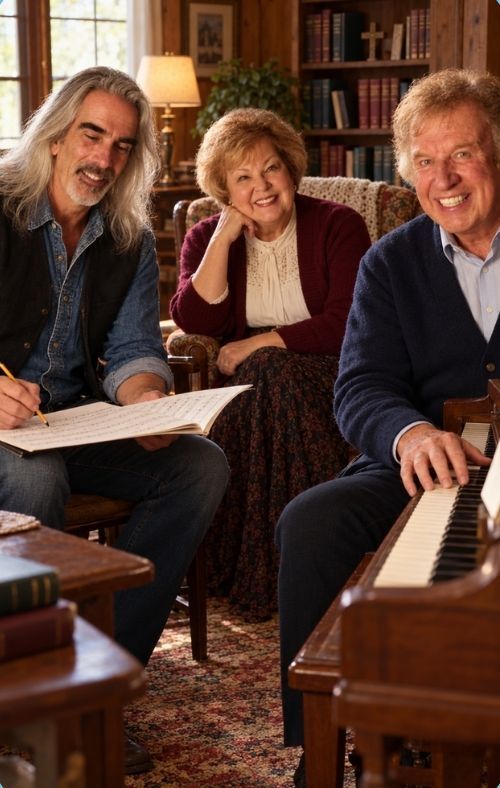
For those who have spent decades listening to Gloria Gaither, her presence carries a familiarity that goes beyond recognition. She belongs to the remembered sound of Sunday evenings, cherished recordings, and songs that arrived when ordinary conversation could offer little comfort. Within the Gaither Homecoming tradition, her contribution has always extended beyond the notes she sang. She helped give the music its language: thoughtful, welcoming words through which listeners could recognize their own grief, gratitude, and hope.
That emotional connection makes any suggestion of a farewell particularly powerful. Yet the account supplied here does not establish that Gloria formally announced she would never sing again. It acknowledges the absence of a definitive public statement, then imagines private conversations and reactions that should not be presented as documented events. A respectful appreciation of her life requires something more lasting than a dramatic retirement claim: attention to the work itself, and to the woman whose writing helped generations find words for their faith.
Her official biography offers a revealing perspective. Gloria Gaither traveled with the Bill Gaither Trio for twenty years before turning to graduate work in literature. It also credits her with more than forty books and scripts for over one hundred Homecoming videos. Writing, therefore, has never been a secondary chapter in her story. It has been one of its central purposes. Her literary interests and commitment to thoughtful songwriting help explain why her contribution cannot be measured solely by appearances at a microphone. Gaither Music
For an older listener, “We Have This Moment, Today” provides a particularly meaningful way to consider that contribution. The song’s emotional strength lies in its attention to the present. Rather than treating ordinary life as something to endure before a greater occasion arrives, it asks us to recognize the value already around us. A familiar voice, a shared meal, a child growing older, or an unhurried conversation may become precious precisely because none can be held indefinitely.
Heard through the experience of later life, that message deepens. We begin to understand that gratitude requires attention. The people beside us deserve more than affection postponed until a convenient day. The song becomes an invitation to notice, to listen, and to express love while there is still an opportunity. Its tenderness comes from that recognition, allowing a modest domestic moment to carry considerable spiritual weight.
This is an interpretation of the song’s meaning, rather than evidence of Gloria’s private reasons for any change in her performing schedule. Nevertheless, it offers a richer understanding of her legacy. A songwriter’s voice continues whenever another person sings the words sincerely. It can reach a congregation through someone she has never met, or comfort a family long after the recording session has ended.
There is also documented evidence of her public contribution beyond performance. On October 15, 2025, Liberty University presented Bill and Gloria with honorary Doctor of Music degrees. Addressing the students, Gloria emphasized the hope she saw in the younger generation. That moment provides a moving picture of an artist looking toward the future and recognizing possibilities in others. Liberty News
The musical community they helped build also continued gathering. Gaither Music’s announcement for “I Go to the Rock,” released in March 2026, describes a Homecoming recording bringing together more than 250 artists, assembled by Bill and Gloria the previous autumn. Such a gathering demonstrates how a shared repertoire can become a meeting place across generations. Gaither Music
Perhaps that is the most affecting way to hear Gloria Gaither today. Listen for the thought behind the melody, the care within the phrasing, and the understanding of human vulnerability that makes a gospel song feel personal. Her work invites us to consider how purpose can endure as the shape of a life changes.
For listeners who have grown older alongside these songs, that invitation carries quiet reassurance. Our contribution does not lose its meaning when our circumstances change. A sentence, a memory, a word of encouragement, or a song passed to someone younger can still matter deeply. “We Have This Moment, Today” remains moving because its wisdom belongs to everyday life—and because everyday life is where its message must finally be lived.