Introduction
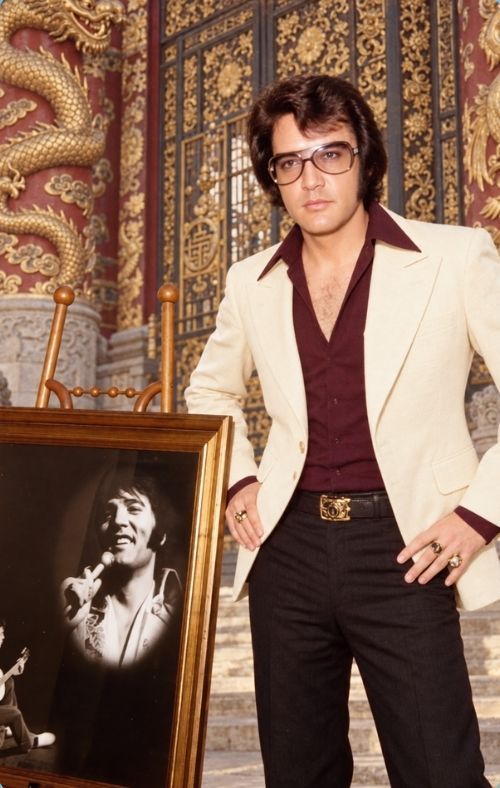
Behind Graceland’s Closed Doors: The Elvis Story That Needs No Hidden Recording
There is something deeply compelling about a closed door in a house the world believes it knows. At Graceland, where visitors come seeking a connection with Elvis Presley, the distinction between public memory and private life invites endless questions. What did he keep for himself? Which memories mattered when the applause faded? And how much of the man can we understand through the music he left behind?
The supplied video transcript builds its narrative around an extraordinary claim: that an attic sealed for forty-eight years was opened, revealing intimate possessions and previously unheard recordings. It is an arresting premise, but the material provided does not establish those discoveries as fact. Without corroborating documentation, its descriptions of hidden tapes, personal messages, and an archival unveiling should be treated as unverified claims, rather than accepted chapters in Elvis’s biography.
What is documented offers a quieter, more meaningful starting point. Graceland’s own hospitality website describes the mansion’s upstairs as the private living quarters of Elvis and his family, excluded from the mansion tour. That boundary gives us reason to reflect on privacy, without assuming that it conceals a sensational secret. A home can preserve something valuable simply by withholding it from public view.
For listeners who grew up with Elvis, the strongest connection rarely depends on a newly discovered object. It comes through a familiar voice heard again after many years. A recording can return us to a family kitchen, a long drive, or an evening when someone we loved was still beside us. His music remains powerful because it accompanies our memories while continuing to reveal shades of feeling we may have missed when we were younger.
That is why “Unchained Melody” provides such a moving musical counterpart to the questions raised by the transcript. Elvis’s official music website identifies a live recording from June 21, 1977, at the Rushmore Civic Center, made for the television special Elvis in Concert. This documented performance deserves attention on its own terms, without being confused with the alleged unaccompanied attic recording described in the video.

Listening to the performance, one hears an interpreter willing to give a familiar melody considerable emotional weight. The phrases seem to reach outward, gathering force as they rise. The quieter passages hold their own tension, inviting us to listen closely before the next surge of sound. For me, its greatest strength lies in that movement between restraint and release: the sense that the singer is discovering the feeling within the song as he sings it.
It is tempting, with hindsight, to hear every late performance as a farewell. Yet musical interpretation calls for care. The emotion we hear does not prove what Elvis knew about his future, and a powerful performance cannot establish a private intention that was never documented. We can acknowledge its poignancy while allowing the song to remain a song—an expression of longing whose meaning belongs partly to the singer and partly to each listener.
Perhaps that is the most rewarding way to approach Elvis’s legacy. We need not imagine that a locked room contains the final answer to his life. The recordings already available give us much to consider: the shape of a phrase, the warmth of a sustained note, the instinct to make a well-known song feel personal.
Graceland’s closed doors may continue to stir curiosity. But when “Unchained Melody” begins, another kind of door opens—one into memory, feeling, and the enduring relationship between an artist and his audience. For those willing to listen patiently, that remains a discovery worth making.
Video