Introduction
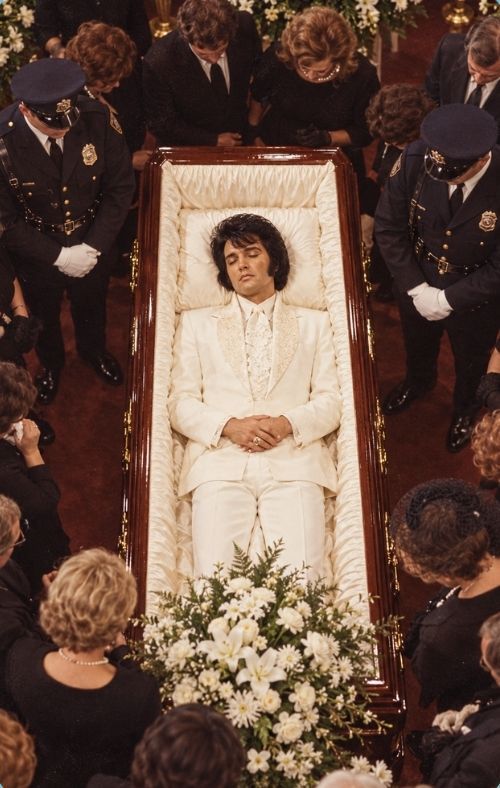
For those who remember hearing Elvis Presley for the first time, his voice belongs to something more personal than music history. It recalls a room, a radio, a familiar face, perhaps an evening when life still seemed full of possibilities. That is why the story of his death continues to stir such powerful feelings. The loss was real, but the voice remained astonishingly present.
Elvis died at Graceland on August 16, 1977, at the age of 42. Graceland’s official account records that date and place, providing a clear historical foundation beneath the many stories that have accumulated since. Yet accepting a date on a calendar is different from accepting the disappearance of someone whose music has accompanied your own life.
The supplied video transcript builds its narrative around unsettling claims: an unfamiliar appearance in the coffin, a supposedly secret reopening, and an alleged breakthrough involving the FBI. These assertions create suspense, but the transcript does not establish them with identifiable records or verifiable testimony. The FBI’s public Vault search description states that Presley was not investigated by the bureau; that description does not substantiate the video’s claim of a newly solved death mystery. Such a claim requires evidence beyond a dramatic title.
For a listener, however, the more compelling question is why these stories retain their emotional hold. Perhaps part of the answer lies in the peculiar intimacy of recorded music. A photograph preserves a face at a distance. A recording allows someone to enter the room again. The breath before a phrase, the slight hesitation, the warmth gathering around a sustained note—all can make an absent singer feel briefly close.
Listen to “Are You Lonesome Tonight?” and notice how much of its effect comes from restraint. Elvis allows the melody to unfold with the ease of a conversation. His phrasing invites the listener to lean closer, while the spoken passage gives the performance a theatrical vulnerability. The song’s power rests in that delicate relationship between confidence and uncertainty.
In “How Great Thou Art,” the emotional scale expands. Here, his voice can suggest both personal devotion and the grandeur of a shared musical tradition. Quiet passages make room for reflection; stronger phrases release the feeling that has been gathering beneath them. For listeners who value gospel music, the performance offers a particularly revealing way to hear his expressive range.

Then there is “Unchained Melody.” Its long melodic lines demand patience, breath, and the ability to sustain an emotional thought. In Elvis’s interpretation, the yearning can feel almost tangible. Knowing how his life ended inevitably influences the way many people hear it today, although a moving performance should never be treated as evidence of an undisclosed message or a prediction of death.
These songs offer something richer than the promise of a hidden revelation. They allow us to consider the man behind the legend through the work he actually left behind. His voice could be assured, tender, expansive, or fragile, sometimes within the same performance. That variety helps explain why successive generations continue to find their own experiences reflected in his music.
For older listeners, returning to Elvis Presley’s legacy may also mean returning to their own past. A familiar recording can recover the atmosphere of a first home, a long journey, or a person deeply missed. The emotion belongs partly to the singer and partly to the life of the person listening.
That is the enduring poignancy of his final chapter. History records an ending, while music repeatedly restores a sense of presence. Every time the record begins, the voice arrives again—recognizable, expressive, and capable of reaching someone who thought they already knew every note.