Introduction
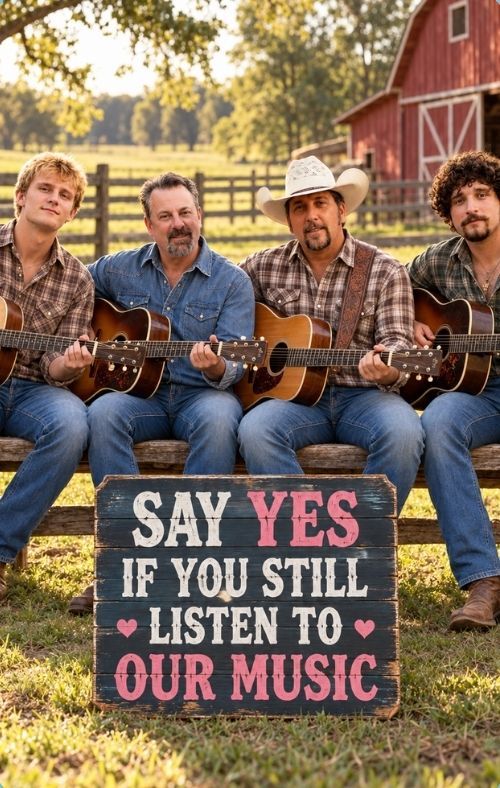
THREE GENERATIONS. ONE SMALL TOWN. ONE UNBREAKABLE LEGACY. For those who grew up listening to The Statler Brothers, those words carry the warmth of something familiar: a record playing in the living room, a chorus remembered after Sunday worship, or a voice on the radio that could make a long drive feel a little less lonely. Today, the musical connection between Harold and Don Reid, their sons, and their grandsons offers a moving reason to listen again.
The story begins in Staunton, Virginia, where the group’s history reaches back to 1955. More than seventy years later, the town remains inseparable from its identity. The Statlers retired from touring in 2002, but Staunton’s Statler Boulevard and the monument in Gypsy Hill Park preserve a visible connection to musicians whose work traveled far beyond the Shenandoah Valley.
Yet a monument can only tell part of a musical story. The rest lives in the sound.
Listen to a Statler Brothers recording and notice how carefully the voices make room for one another. The lead carries the narrative, while the surrounding parts deepen its meaning. Harold Reid’s bass gives the arrangement its distinctive weight; Don Reid’s lead brings clarity and conversational warmth. Alongside the contributions of Phil Balsley, Lew DeWitt, and later Jimmy Fortune, that balance helped create a group identity far larger than any single voice. The Statlers’ achievements included three Grammy Awards and a remarkable succession of major country music honors.
For an older listener, their appeal often rests in that sense of proportion. They could approach memory with tenderness, faith with conviction, and humor with impeccable timing. Their singing allowed a song’s story to unfold without demanding that every moment become a grand declaration. The feeling emerged through phrasing, restraint, and the pleasure of hearing voices resolve together.
That inheritance continues through Wil and Langdon Reid, who perform as Wilson Fairchild, and through the next generation, Jack and Davis Reid. The family connections are worth stating clearly: Jack is Wil’s son and Harold’s grandson, while Davis is Langdon’s son and Don’s grandson. Their own official media page documents both those relationships and their work as performing musicians.
A famous surname brings recognition, but it also brings expectations. Listeners arrive with cherished recordings already in their minds. Every familiar turn of phrase can invite comparison. For younger musicians, the artistic challenge is to honor that affection while developing a voice audiences will come to recognize on its own.
This is where the Reid family legacy becomes especially compelling. Hearing another generation sing invites us to consider what a family actually passes down: an ear for harmony, an instinct for timing, an understanding that the person beside you matters as much as the microphone in front of you. Those qualities require practice, attention, and a willingness to listen.
For anyone approaching this music today, listen first for that relationship between the voices. Notice the supporting phrase, the held note, the moment when separate singers seem to breathe together. Within those small musical decisions lies much of the Statlers’ enduring power.
Staunton, Virginia, gives this story its setting. Three generations of the Reid family give it continuity. And the music gives longtime listeners something deeply precious: the opportunity to hear a beloved tradition finding its way into another generation’s hands.