Introduction
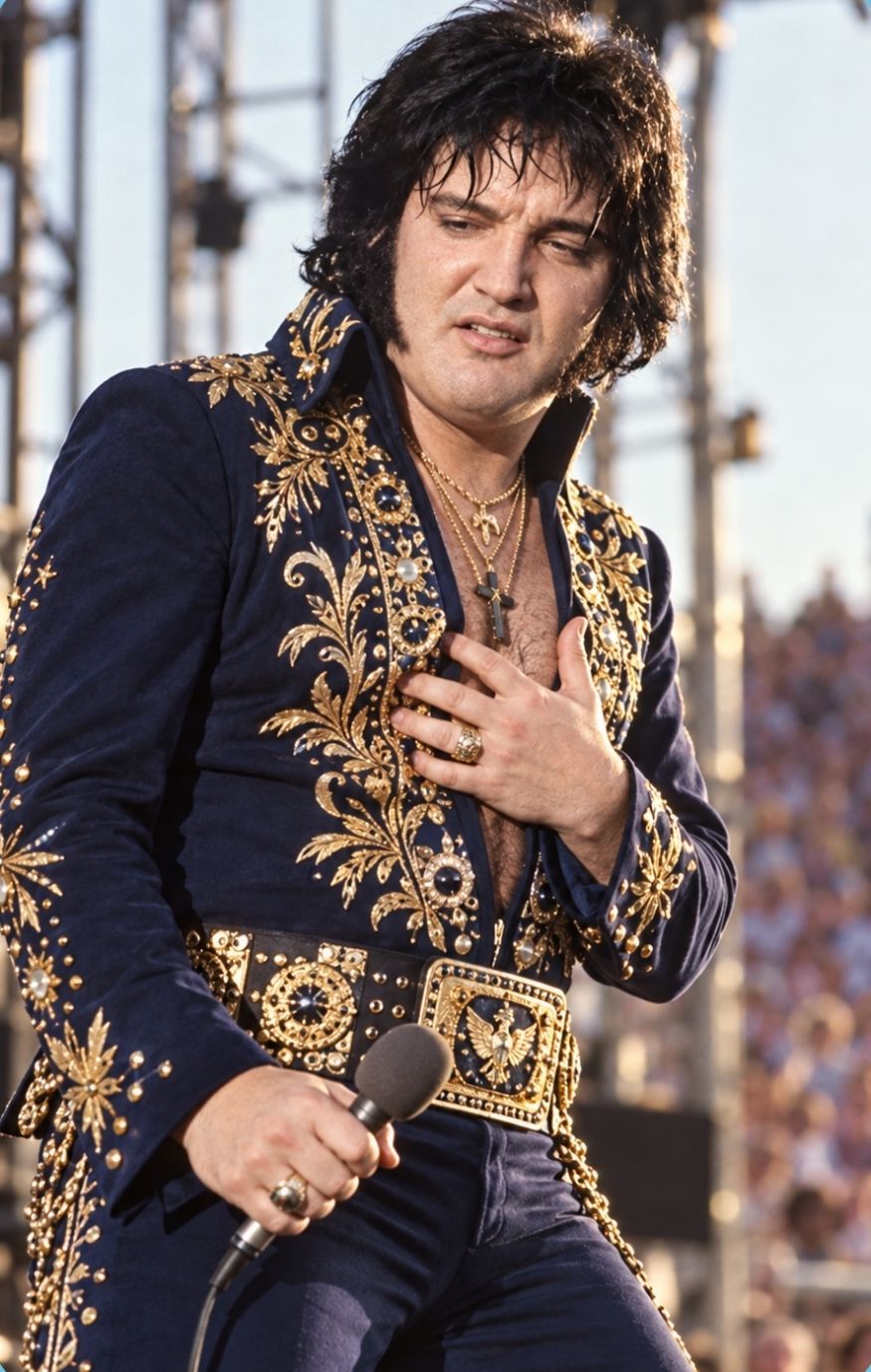
There are performances we remember for their perfection, and others we remember because they reveal something painfully human. Elvis Presley’s rendition of “Unchained Melody” in Rapid City, South Dakota, on June 21, 1977, belongs to the second kind. Recorded during the final weeks of his life, it captures a singer whose physical struggles were becoming difficult to overlook, yet whose musical presence could still command extraordinary attention.
At the piano, Elvis appears tired. Watching him now, with the knowledge of what followed, it is difficult to separate the performance from its heartbreaking place in history. Yet the moment he begins to sing, the music asks us to listen more closely. The familiar richness returns: that deep, resonant tone, the emotional weight of a carefully sustained phrase, and the unmistakable ability to make a large room feel intimate.
“Unchained Melody” gives those qualities room to unfold. Its melody demands patience before it demands power. The singer must allow the feeling to gather, moving from quiet yearning toward an increasingly exposed emotional peak. Elvis approaches that journey with a directness that makes the performance compelling. His delivery feels deeply invested in the song, with each rising phrase carrying more urgency than the one before it.
For older listeners who remember his early records, his films, or the excitement surrounding his concert appearances, this footage can stir complicated feelings. The face is familiar, although changed. The voice carries echoes of earlier decades, while the man at the keyboard seems weighed down by the present. Both impressions remain in view, and together they give the performance its unusual emotional force.

Musically, the most striking feature is the relationship between vocal strength and vulnerability. Elvis’s lower register lends gravity to the opening passages, while the upper phrases bring a sense of release. His phrasing retains the expressive freedom that made his singing distinctive: a slight hesitation, a swelling note, a movement from restraint toward fullness. These choices give the song its character as surely as the climactic notes do.
The piano also matters. With Elvis seated at the instrument, the focus settles on the act of making music. The performance becomes intimate enough for us to notice effort, concentration, and the changing expression on his face. For a few minutes, the song offers a particularly close encounter with an artist whose public image had grown almost impossibly large.
Historical accuracy makes the moment more poignant. Rapid City was not Elvis’s final concert. Five days later, on June 26, 1977, he performed at Market Square Arena in Indianapolis. On August 16, 1977, he died at Graceland, aged 42. Those dates place this rendition within the closing chapter of his career, although the performance itself should not be treated as a farewell he knowingly intended.
What remains is the encounter between a demanding song and a remarkable interpreter. The sadness we bring to the footage is real, but so is the pleasure of hearing Elvis shape a melody with conviction. “Unchained Melody” preserves a moment when his artistry was still vividly present—moving through fatigue, reaching the audience, and leaving a lasting impression on everyone willing to listen.