Introduction
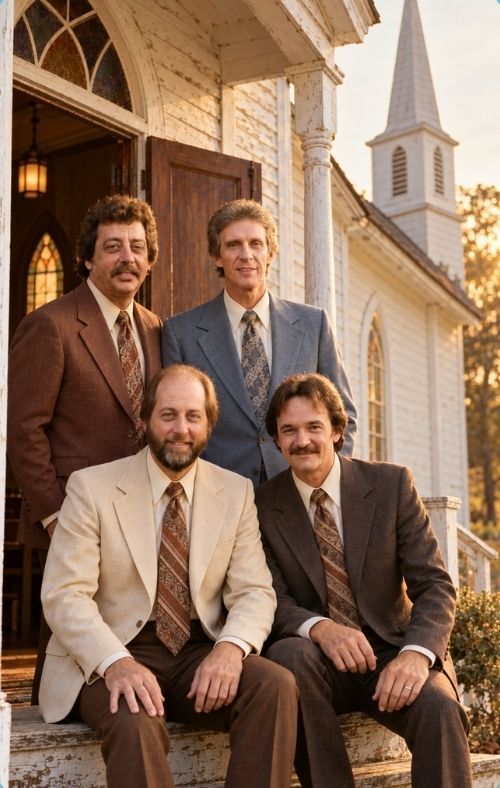
A man sits alone, filling his days with small, peculiar routines. He insists that everything is fine. The Statler Brothers sound almost cheerful as they tell his story, but the longer you listen, the less convincing his confidence becomes. That tension gives “Flowers On The Wall” its lasting appeal: the song makes us smile while allowing us to recognize a sadness its narrator cannot quite admit.
Written by Statler Brothers member Lew DeWitt, the song became the group’s breakthrough in 1965. It reached No. 2 on the country chart and No. 4 on the pop chart, carrying the quartet’s harmonies far beyond their usual audience. Yet its success is only part of the reason it remains memorable. Many songs about loneliness ask us to feel sorry for the person at their center. “Flowers on the Wall” lets that person speak for himself, with wit, pride, and a determination to appear untroubled.
The arrangement helps make the deception work. The voices are crisp and assured; the rhythm moves along with an easy confidence. Nothing in the performance demands our sympathy. Instead, the Statlers leave room for us to hear the distance between the narrator’s breezy account of his days and the life we gradually picture around him. It is a remarkably gentle way to tell a painful story.

There is also affection in the group’s delivery. The narrator may be absurd, but he is never reduced to a joke. Anyone who has tried to keep busy through a difficult season may recognize something familiar in his elaborate distractions. We invent little tasks, repeat comforting habits, and sometimes tell friends we are doing well before we believe it ourselves. The song understands that impulse without scolding it.
That understanding makes the Statler Brothers’ harmony especially effective. Their four voices bring warmth and order to a portrait of isolation. Each time the refrain returns, its polish makes the narrator’s private world seem momentarily secure. Then the details of his story unsettle that impression again. The result is a song that can sound playful on the radio and surprisingly moving in a quiet room.
Hearing “Flowers On The Wall · The Statler Brothers” on “The Best Of The Statler Brothers” also reminds us how distinctive the quartet was. The song appears on the group’s compilation, but it has a character all its own: country storytelling shaped by close harmony and a dry, understated sense of humor.

Six decades after its first success, “Flowers on the Wall” still rewards another listen. The joke is easy to catch. The tenderness takes a little longer. Somewhere between those two responses lies the song’s quiet brilliance—and the reason the Statler Brothers’ voices continue to feel like welcome company.