Introduction
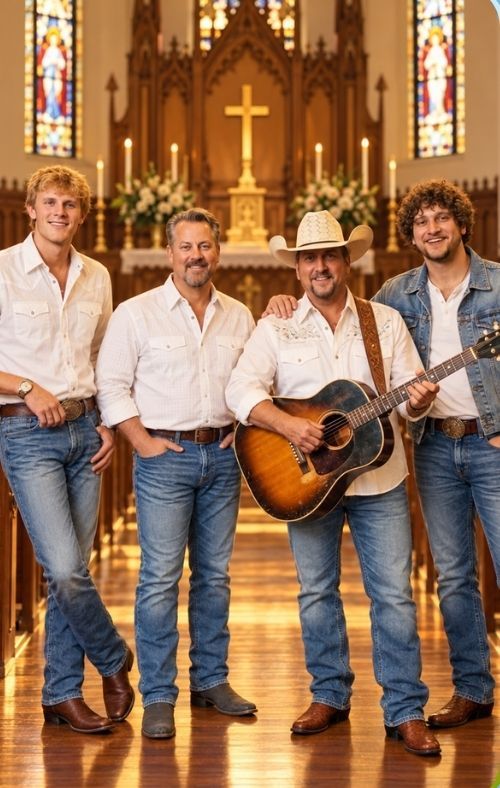
THE REID FAMILY’S HARMONY DIDN’T END WITH ONE GENERATION — IT FOUND NEW VOICES. That thought comes into focus when Jack and Davis Reid sing alongside their fathers, Wil and Langdon Reid of Wilson Fairchild. Jack is Harold Reid’s grandson; Davis is Don Reid’s grandson. Together, the cousins carry a family connection to The Statler Brothers that listeners can hear, while bringing their own voices to the music.
A familiar surname can open a door, but it cannot sing a note for you. That is what makes Jack and Davis interesting to watch. They have inherited songs that many listeners know by heart, along with the expectations those songs carry. When a younger musician takes up such a piece, the audience listens on two levels: for the melody they remember and for the person now standing behind it. Jack and Davis have the opportunity to honor both.
Their appearance with Wilson Fairchild on “I’ll Go To My Grave Loving You” offers a particularly fitting example. The song belongs to The Statler Brothers’ catalog, and the newer recording brings the cousins together with their fathers. Its appeal lies in that audible meeting of generations. The younger voices do not need to erase the earlier rendition to give listeners a reason to return. They can let its history be heard, then show what the song means in their own hands.
That approach suits the Reid family’s musical tradition. The Statler Brothers knew how to make a group performance feel welcoming: each voice had a place, and the pleasure came from hearing those parts come together. Wilson Fairchild carried that sense of companionship into their own work as a duo. Now Jack and Davis can learn from the same close listening that makes good harmony possible, even as they develop a sound and stage presence of their own.
There is something moving, too, about the audience’s part in this story. Longtime fans may arrive with memories of Harold and Don, perhaps attached to a particular record, concert, or period of life. Jack and Davis meet those listeners where they are. Yet a performance can do more than bring back a cherished sound. It can introduce the cousins to someone hearing them for the first time, with no family memory required to enjoy the singing.
That is how a tradition stays alive. Songs pass from one set of voices to another, and each generation must decide to make them its own. Jack and Davis Reid have a remarkable musical inheritance, but the most compelling part of their story is unfolding in the present. When they step up to sing, the family history is there. So are two musicians with room to grow, listening to those who came before them and giving the next verse their own sound.