Introduction
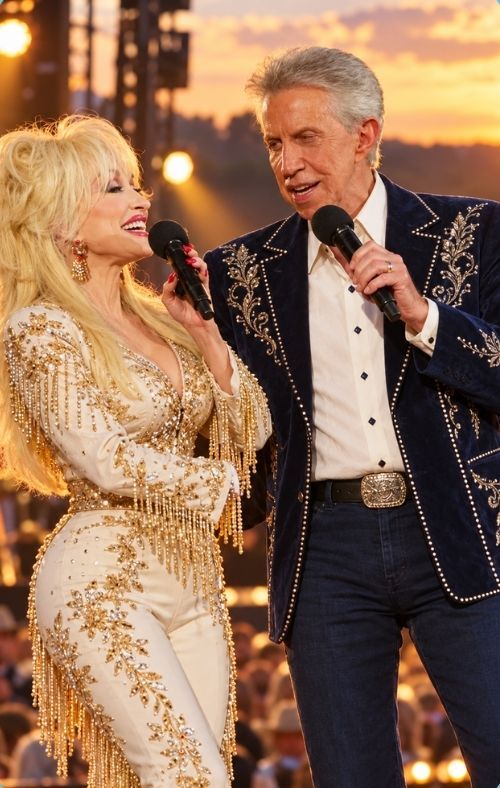
Picture a small country church after the congregation has gone home. The last notes of a hymn have faded, and someone places an old photograph of Porter Wagoner and Dolly Parton beside the flowers. It is a fitting place to remember their music: intimate, full of feeling, and rooted in the voices of two people whose lives were changed by singing together.
That church scene is imagined. Porter Wagoner could not have paid tribute to Dolly Parton after her death; he died in 2007. Yet the idea draws us toward a real story, one that gives “I Will Always Love You” much of its emotional weight. Parton wrote the song as a farewell to Wagoner when she decided to leave his television show and pursue her own career.
Parton joined The Porter Wagoner Show in 1967, stepping into a role that brought her voice into homes across America. The two went on to make a remarkable series of duets. Their musical partnership helped establish Parton before her solo career made her one of country music’s defining artists.
To listen to “I Will Always Love You” with that history in mind is to hear more than a conventional goodbye. Parton was leaving a partnership that had mattered deeply to her work. The song gives that departure a rare generosity. Its melody moves gently, and its words leave room for affection even as they acknowledge a necessary parting. She did not need to turn the moment into a dramatic argument; she found a way to make gratitude audible.
That restraint is one reason the song has lasted. The original recording lets Parton’s voice carry the difficult balance between warmth and resolve. She sounds certain of her decision while recognizing what the relationship had meant. Older listeners may hear in it something familiar from their own lives: the knowledge that leaving can be painful even when it is the right thing to do.

Wagoner’s place in the story deserves care, too. He was an established performer and television host when Parton joined him, and their contrasting voices became part of the appeal of their duets. Listen back to those performances and you can hear the ease that made audiences welcome them as a pair. Their professional relationship also had its difficulties. “I Will Always Love You” remains powerful because it does not require us to erase that complexity to appreciate what they created together.
The imagined church offers a quiet way to revisit their history. One might play an old duet, then Parton’s original recording of “I Will Always Love You.” The change would be unmistakable: first, two singers sharing a musical path; then, one voice explaining why she must take the next part of it alone. No invented speech from Wagoner is needed. The recordings already tell us how much their years together shaped the music.
In 2007, Parton was the one who helped honor Wagoner, singing at his memorial service at the Grand Ole Opry. It is a poignant fact beside the imagined tribute in a church. Their story continues to move listeners because it holds both a beginning and a farewell—and because Parton wrote a song that allowed affection to survive the distance between them.