Introduction
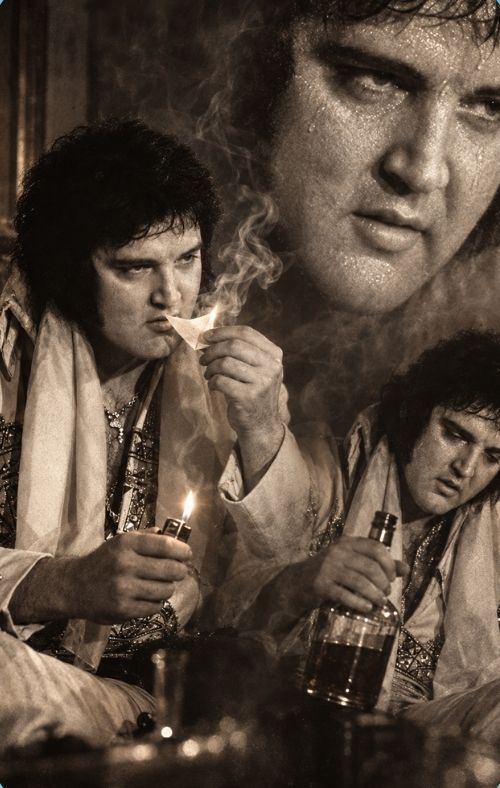
The Last Songs at Graceland: What Elvis Presley’s Final Hours Reveal About the Man Behind the King
In the early hours of August 16, 1977, Elvis Presley sat at a piano in Graceland and sang for a small group of people close to him. According to the account presented in The Last Hours of the King, two of the songs were “Blue Eyes Crying in the Rain” and “Unchained Melody.” By the following afternoon, Elvis was dead at 42. Knowing what came next makes that quiet performance difficult to hear as an ordinary moment.
Both songs suited a voice that had changed over the years. “Blue Eyes Crying in the Rain” carries its sorrow plainly, with enough room between its lines for a singer to give each word its weight. “Unchained Melody” asks for something different: a long, rising expression of longing. Elvis understood how to make a large song feel personal. Even when he sang before thousands, listeners often felt he was addressing them alone. At a piano in his own home, with no concert audience to reach, that gift takes on a different meaning.
The documentary places those songs within a troubling account of his health. It describes insomnia, pain, heavy use of prescription medication, and signs of heart disease. Forensic pathologist Dr. Richard Shepherd examines the available medical records and proposes an explanation for Elvis’s collapse. His assessment is an interpretation of that evidence, rather than a moment anyone witnessed or a question the songs themselves can answer.
What the music does reveal is the persistence of Elvis’s instinct to sing. He was preparing to return to the road, and performance had shaped nearly every part of his adult life. Yet this was no arena show. There were no elaborate entrances or thousands of voices waiting for a familiar chorus. There was a piano, a few companions, and a man choosing songs that had stayed with him. That setting invites us to listen past the spectacle of the King of Rock and Roll and hear the musician at work.
It is tempting to treat a final song as a message left behind. We cannot know what Elvis intended that night. “Unchained Melody” was already part of his repertoire, and singing could simply have been the most natural thing for him to do. The power of the scene comes from holding those two truths together: it was an unplanned final performance, and it became precious only after his death.
Nearly five decades later, Elvis Presley remains an artist whose records can still surprise listeners with their tenderness. His final hours are often discussed through the circumstances of his death. The songs at Graceland offer another way into the story. They remind us that behind the famous voice was someone who still turned to music in the company of people he knew—and that, for a little while longer, the voice was there.