Introduction
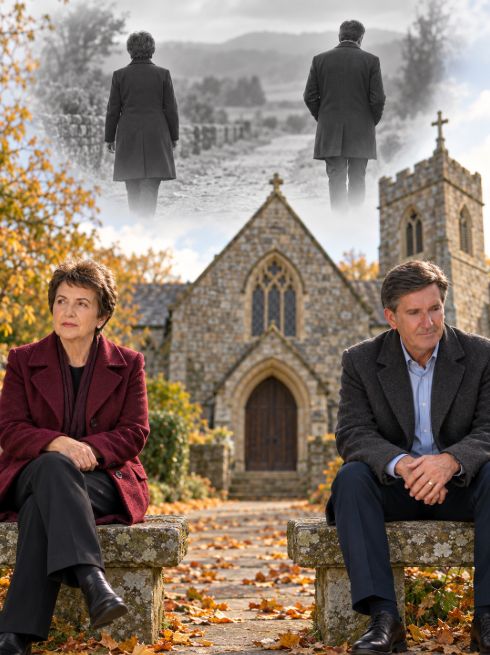
For audiences who have long associated Daniel O’Donnell with gentleness, family values, and reassuring songs, the story of his painful estrangement from his older sister carries an almost unbelievable sadness. Daniel O’Donnell and his sister Margo stopped communicating for over 20 years after a quarrel on stage. After many years, their relationship became increasingly strained. Behind that dramatic statement lies something more complicated than an ordinary disagreement between two famous performers. It is the story of a brother and sister connected by childhood, music, ambition, and memory—yet separated for years by wounds neither fame nor applause could easily heal.
Long before Daniel became one of Ireland’s most recognizable entertainers, Margo O’Donnell had already established herself as an important voice in Irish country music. Known affectionately as “The Girl from Donegal,” she helped create a path that her younger brother would later follow. Daniel learned by watching her perform, meeting musicians, and understanding how a professional entertainer connected with an audience. Their shared musical history was therefore not merely a matter of two relatives working in the same industry. Music was woven into the foundations of their family relationship.
The two even recorded together, including the successful 1988 release “Two’s Company.” To listeners, their voices represented family harmony: two performers from the same Donegal background carrying familiar Irish emotions into homes and concert halls. Yet harmony on a record does not always mean harmony away from the microphone. As both careers developed, professional pressures, misunderstandings, and unresolved personal grievances reportedly began to affect their bond.
The argument associated with their estrangement has often been described as having erupted on or around a stage appearance. However, the complete details have remained largely private, and it would be unfair to pretend that outsiders know every word spoken between them. What seems clear is that the disagreement was not forgotten when the curtain came down. Instead, the emotional distance continued, and the relationship reportedly remained strained for more than two decades.
For anyone who has experienced a family separation, the painful part of this story is not necessarily the original quarrel. It is the silence that followed. One missed conversation becomes a month; one year quietly becomes five; pride, disappointment, and uncertainty make the first step toward reconciliation increasingly difficult. Eventually, both people may remember the love they once shared while no longer knowing how to cross the distance between them.
That is why this chapter in the lives of Daniel and Margo O’Donnell resonates beyond celebrity news. Their story touches upon a universal truth: the people closest to us often possess the greatest power to comfort us, but they can also cause the deepest hurt. A disagreement with a stranger may disappear within days. A wound involving a brother or sister can remain present at Christmas gatherings, family anniversaries, funerals, and every important moment when an empty chair is impossible to ignore.
Daniel’s public image has always rested upon warmth, humility, faith, and devotion to family. Margo’s career, meanwhile, was built through determination and the courage required of a woman establishing herself in a demanding music industry. Neither should be reduced to the role of villain in a dramatic family dispute. Estrangements are rarely created by one moment alone. They usually grow from different memories, unspoken disappointments, and years of emotional weight.
Their history also changes how longtime admirers may hear their music. Songs about home, forgiveness, loneliness, and returning acquire a deeper meaning when listeners understand that the singers themselves have known painful separation. Suddenly, a familiar melody can sound less like entertainment and more like a private confession.
The most moving lesson is not found in determining who was right on that distant stage. It lies in recognizing what prolonged silence can take from a family. Careers move forward, audiences applaud, and records continue to play—but lost years cannot be performed again.
Daniel O’Donnell and his sister Margo gave Irish country music voices filled with sincerity and memory. Their long estrangement reminds us that behind even the most comforting music are imperfect human beings carrying private sorrow. It is a powerful story about pride, regret, and the fragile bonds of family—and a warning that sometimes the hardest words to say are also the simplest: “Let us talk again.”