Introduction
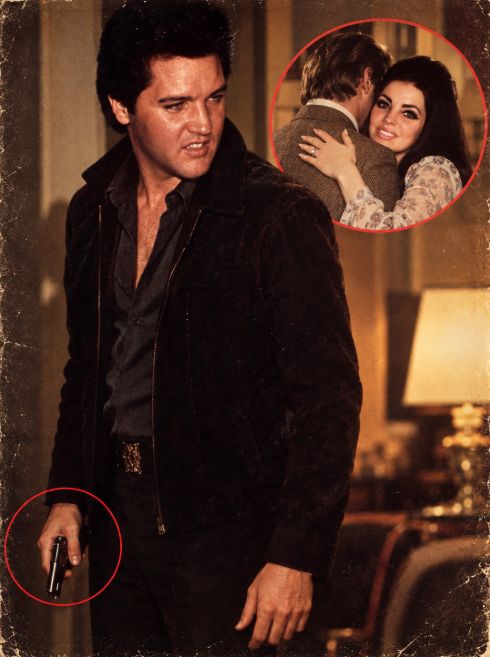
The audience had come to hear Elvis Presley sing. At a Las Vegas midnight show in 1973, four men rushed the stage, turning a familiar concert ritual into a moment of confusion. Security intervened, and Elvis helped force one of the men away. The immediate danger passed. What happened afterward, according to accounts of those close to him, was more troubling.
Elvis believed the men might have been sent to kill him. His suspicion settled on Mike Stone, a martial artist connected to Priscilla Presley. The men were later described as overenthusiastic fans; there is no evidence that Stone sent them. Yet the distinction between what happened and what Elvis feared had little power over him that night. Behind the confident stage presence was a man shaken by the possibility that someone had come for him. Entertainment Weekly’s account of the stage incident describes both the confrontation and Elvis’s subsequent suspicion.
The most disturbing part of the story concerns what Elvis reportedly said in the hours that followed. Accounts from his circle describe repeated talk of having Stone killed. Red West, Elvis’s longtime friend and bodyguard, reportedly looked into the cost of such a request while trying to manage Elvis’s anger. The often repeated $10,000 question belongs to that account. It should not be mistaken for proof that money changed hands, that a contract was completed, or that Stone had threatened Elvis.
That uncertainty matters. A dramatic retelling can make the episode sound like a secret plot with a clear beginning and a narrow escape. The available accounts tell a more human, and perhaps more unsettling, story: a frightened man became fixated on an explanation for the stage rush, then spoke about violence as his friends tried to calm him. No attack on Stone followed.
For listeners who grew up with Elvis’s records, this episode may seem far removed from the voice they know. Yet music can make a performer feel familiar without revealing what it was like to live inside his fame. Onstage, Elvis could turn a room’s attention into warmth and excitement. After the lights went down, that same visibility could leave him feeling exposed. The Las Vegas incident offers a glimpse of the distance between the public figure who seemed in command and the private person who, at least on this occasion, was overwhelmed by fear.
It also asks something difficult of his admirers. We need not deny the seriousness of the reported request to appreciate his artistry, nor treat every recollection as a settled fact. We can hear the tenderness and authority in his performances while acknowledging that those closest to him described a night when his judgment faltered badly.
The enduring question is therefore larger than $10,000. It is how quickly fear can harden into certainty, especially when everyone around a famous person is expected to respond to his wishes. Elvis left the stage safely that night. The story remembered by his friends concerns what they say they had to prevent after the applause ended.