Introduction
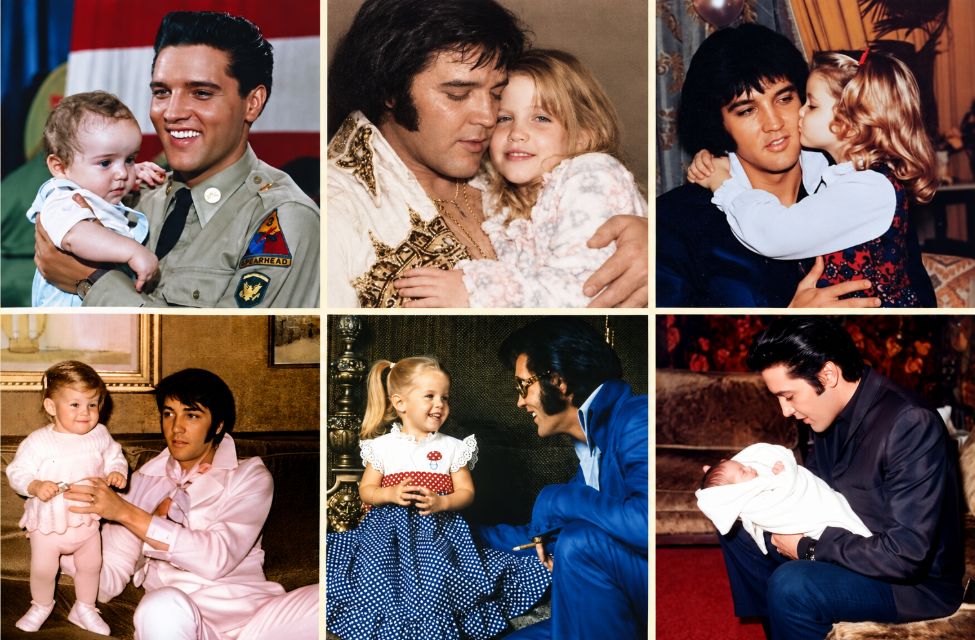
To millions of admirers around the world, Elvis Presley was the King of Rock and Roll—a revolutionary performer whose voice, charisma, and unmistakable presence transformed popular music forever. Yet behind the gates of Graceland, far from the stage lights and roaring crowds, he occupied a much simpler and more intimate role. To Lisa Marie Presley, he was not merely an American legend. He was Daddy.

DADDY’S LITTLE GIRL — Lisa Marie Presley carried her father’s love long after the world lost him captures the deeply human relationship hidden beneath one of the most famous family names in entertainment history. Lisa Marie was born on February 1, 1968, and entered a world of extraordinary fame before she could possibly understand what it meant. Cameras followed the Presley family, newspapers documented their lives, and strangers felt an emotional connection to the man she knew privately as her father.
At Graceland, however, Elvis could briefly step away from the demands of celebrity. He could watch his daughter play, surprise her with gifts, listen to her stories, and enjoy the ordinary happiness that parenthood brought him. Those private moments reveal a side of Elvis that audiences rarely witnessed. The performer who could command an arena with a single movement was also a devoted father whose expression softened whenever Lisa entered the room.
Lisa Marie later spoke openly about the powerful bond she shared with him. Her simple admission—“I was obsessed with my dad”—expressed the depth of a child’s admiration more clearly than any grand description could. She remembered his warmth, his humor, his generosity, and the feeling of security that surrounded her when he was near.
Everything changed on August 16, 1977. Lisa Marie was only nine years old when Elvis died at Graceland. The public experienced the loss of a cultural giant, but her grief was profoundly personal. Millions mourned the performer whose records had shaped their lives; Lisa mourned the father whose voice had once called her name inside the same rooms that would soon become part of a public memorial.

That distinction followed her throughout her life. Elvis remained everywhere—on the radio, in films, in photographs, and in the memories of devoted fans. His image never seemed to grow older, while Lisa had to continue living, carrying both his famous name and the private sorrow of losing him so young.
Music eventually became one of the ways Lisa Marie established her own identity. Her voice possessed a darker, more reflective quality than her father’s, and her recordings suggested someone determined to speak honestly rather than merely imitate a celebrated parent. Even so, the emotional presence of Elvis Presley remained woven into her story. Their posthumously created performances, including “Don’t Cry Daddy” and “Where No One Stands Alone,” allowed father and daughter to meet through music in a way life had denied them.
Lisa Marie later endured another devastating loss when her son, Benjamin Keough, died in 2020. It was a sorrow she acknowledged would remain with her, yet she continued for the sake of her daughters and family. When Lisa Marie Presley died in January 2023, she was laid to rest at Graceland near Benjamin and close to her father.
There is something quietly moving about that final homecoming. The public will always remember Elvis as the dazzling performer who changed the sound of a generation. Lisa Marie remembered the man behind the legend—the father who laughed with her, protected her, and made Graceland feel like home.
That may be the Presley family’s most enduring and tender truth: the world lost its King in 1977, but Daddy’s little girl spent the rest of her life carrying the love of the man she simply called Daddy.