Introduction
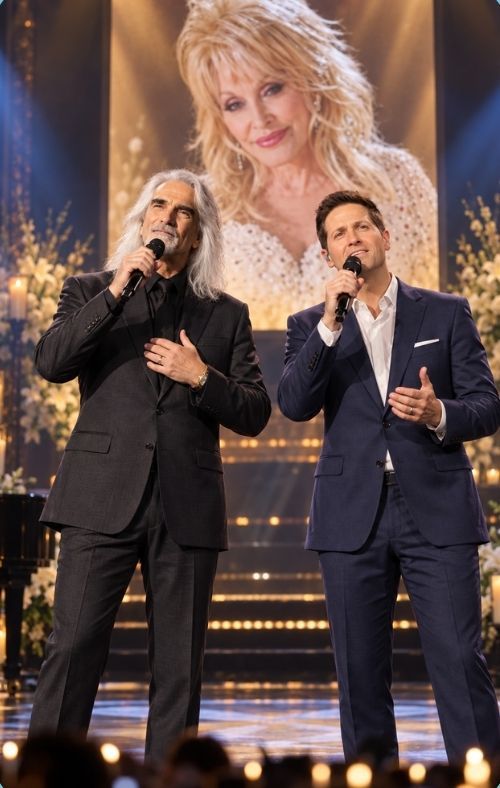
In Southern Gospel music, a great vocal performance is never merely a display of range or technical ability. It is an act of trust. Singers must listen to one another, leave room for every voice, and understand that the meaning of a song often emerges from the harmony rather than from any individual part. Few musical partnerships illustrate this principle more vividly than the years when Guy Penrod and Wes Hampton shared the stage with the Gaither Vocal Band.
A recent online video claims that Penrod made severe private remarks about Hampton and that an “accidentally recorded” conversation was leaked. However, the video itself provides no independently verifiable recording, named witness, or reliable published source for those allegations. Its dramatic assertions should therefore be treated as unconfirmed internet speculation, not established fact. What can be discussed responsibly is the public musical history of two gifted singers whose careers have helped preserve and renew the Southern Gospel tradition.

Guy Penrod became widely recognized through his commanding lead vocals with the Gaither Vocal Band during the 1990s and 2000s. His unmistakable voice combined country warmth, emotional directness, and tremendous strength. Yet power alone was never the secret of his appeal. Penrod understood how to make a sacred lyric sound personal. When he sang about hope, forgiveness, grief, or the promise of heaven, he delivered those themes as if he were speaking across the table to an old friend.
His departure from the group was officially announced in 2009 as he prepared to pursue a solo career—not as the bitter institutional confrontation portrayed in the sensational video. His subsequent recordings, including Breathe Deep, Hymns, and Worship, demonstrated that his artistic identity could thrive beyond the ensemble. His career after the Vocal Band became less a rejection of his past than an extension of it: the same faith-centered message presented through a more personal blend of gospel and country music.

Wes Hampton, meanwhile, joined the Gaither Vocal Band in 2005 and developed into one of its most enduring voices. His singing brings a different color to the ensemble. Where Penrod often projected earthy authority, Hampton contributed clarity, flexibility, and a bright tenor tone capable of rising above an intricate arrangement without disturbing its balance. His longevity should not automatically be interpreted as fear, dependence, or entrapment. Without direct testimony from Hampton himself, assigning such motives to him would be both unfair and speculative.
For longtime listeners, the period when Penrod and Hampton performed together remains especially meaningful. Their voices could contrast sharply while still serving the same musical purpose. A song such as “When I Cry” reveals why their shared work continues to resonate. Its message is not built upon spectacle but upon companionship in sorrow—the comforting belief that suffering is seen, understood, and met with grace. In performances of this kind, individual personalities become secondary to the spiritual reassurance carried by the harmony.
That is also why rumors about hostility can attract so much attention. Audiences who have invested emotionally in these singers naturally wonder what existed behind the stage lights. But curiosity should not require us to accept every dramatic online narrative. A compelling title, an unidentified voice, and repeated claims of secrecy do not constitute proof.
The more valuable story concerns legacy, change, and musical calling. Gospel groups have always evolved as singers enter new seasons of life. Some remain with an ensemble for decades; others build solo ministries or choose different priorities. Neither path automatically proves greater courage or loyalty. Artists make decisions shaped by family, health, faith, opportunity, and private circumstances that outsiders may never fully understand.
Ultimately, the public record gives listeners a richer story than the rumor does. Guy Penrod carried his remarkable voice into a successful solo chapter. Wes Hampton continued contributing steadiness and musical excellence to the Gaither Vocal Band. Together and separately, they have reminded audiences that Southern Gospel is at its finest when powerful voices are placed in service of something larger than themselves.