Introduction
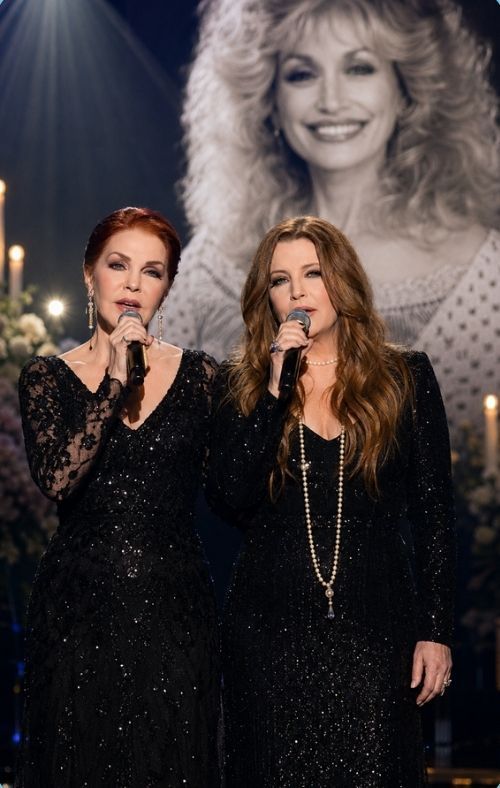
There are moments in music history that seem almost impossible when viewed from a distance. Imagine being a young songwriter from Tennessee, still building a career, and receiving word that Elvis Presley, already one of the most famous entertainers on earth, wanted to record one of your songs. For almost any songwriter of that era, the answer would have seemed obvious. Yet the remarkable story behind Dolly Parton: The day I said ‘no’ to Elvis reveals something deeper about ambition, ownership, courage, and the quiet decisions that can shape an entire lifetime.
The song at the center of the story was “I Will Always Love You,” Dolly Parton’s deeply personal farewell to her longtime professional partner Porter Wagoner. Written when Dolly was preparing to leave Wagoner’s television program and establish herself fully as a solo performer, the song carried enormous emotional weight. It was not created as a grand commercial statement. It was Dolly’s way of expressing gratitude while acknowledging that the time had come to follow her own road. That honesty helped transform the song into something universal.
Then came the possibility almost any songwriter would have dreamed about: Elvis Presley wanted to record it.
Dolly later recalled how thrilled she was at the thought. Elvis was not simply another successful singer. He was already an American cultural phenomenon whose recordings could introduce a songwriter’s work to millions of listeners around the world. Dolly admired him, and the idea of hearing that unmistakable voice singing her composition was understandably overwhelming.
But the excitement was soon complicated by a business condition.
According to Dolly’s widely told account, Elvis’s manager, Colonel Tom Parker, informed her that Elvis generally did not record a song unless the publishing arrangement included a substantial share of the songwriting rights. For Dolly, that meant surrendering part of the ownership of “I Will Always Love You.”
That was where admiration collided with principle.
Dolly understood something that many young performers learn only after painful experience: a song is not merely a performance—it is intellectual property. The writer’s ownership can continue for decades, long after a recording session has ended and long after the applause has disappeared. Giving away a major portion of that ownership could mean surrendering control over something she had created from her own experiences.
And so came the decision at the heart of Dolly Parton: The day I said ‘no’ to Elvis.
She said no.
It was hardly an easy refusal. Dolly has described being deeply emotional about the decision because she genuinely wanted Elvis to sing the song. She could imagine what his interpretation might have sounded like, and she knew what having Elvis Presley record her composition could mean for her reputation as a songwriter.
Yet she refused to sacrifice ownership simply for the prestige of having the King of Rock and Roll sing her work.
History would eventually reveal the extraordinary importance of that choice.
Nearly two decades later, Whitney Houston recorded a soaring interpretation of “I Will Always Love You” for The Bodyguard. Her version became one of the defining recordings of the 1990s and introduced Dolly’s composition to an enormous new international audience. The song that Dolly had protected years earlier became one of the most recognizable ballads in popular music history.
That later success makes the Elvis story easy to view as a clever business decision, but that interpretation misses something important. At the time Dolly made her choice, she could not see the future. She did not know that Whitney Houston would someday record the song. She did not know how valuable the composition would eventually become.
She simply believed that the song belonged to its writer.
That conviction says much about Dolly Parton herself. Behind the rhinestones, humor, warmth, and unmistakable Tennessee voice was a remarkably disciplined songwriter who understood the value of her own creativity. Her refusal was not disrespect toward Elvis. In fact, Dolly has repeatedly expressed admiration for him. It was instead a declaration that admiration should not require surrendering the work she had created.
There is also something wonderfully human about imagining the recording that never happened. Elvis Presley singing “I Will Always Love You” remains one of popular music’s great unanswered questions. His emotional phrasing and gospel-influenced voice might have transformed the song in an entirely different direction. Dolly herself has spoken over the years about wondering how his interpretation might have sounded.
But perhaps the recording’s absence has become part of the song’s legend.
The story of Dolly Parton: The day I said ‘no’ to Elvis is ultimately about much more than two famous entertainers. It is about knowing the value of your work before the rest of the world recognizes it. Dolly was offered something almost irresistible: the possibility of having Elvis Presley sing her song. She walked away because the price was greater than she was willing to pay.
Decades later, “I Will Always Love You” stands as proof that sometimes the most important moment in a career is not when someone says yes.
Sometimes it is the moment when a young songwriter quietly finds the courage to say no.