Introduction
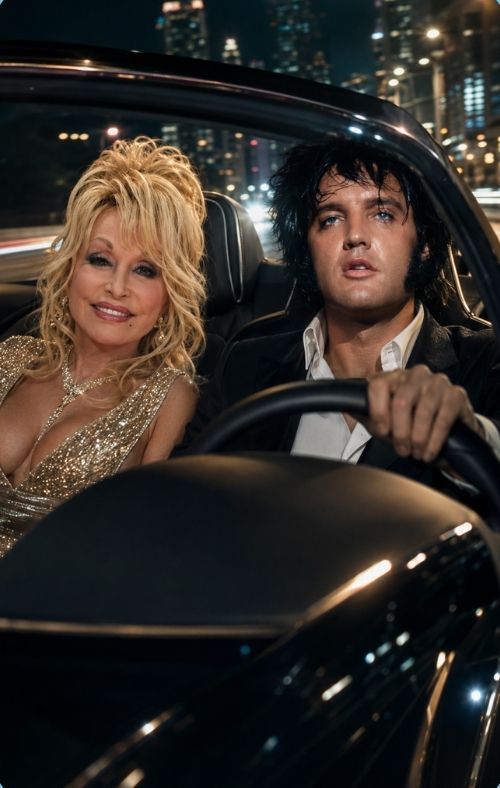
BEYOND THE RHINESTONES: HOW DOLLY PARTON TURNED ORDINARY LIVES INTO SONGS THAT FELT LIKE HOME
Dolly Parton’s Greatest Legacy Was Never the Rhinestones — It Was the Songs That Made Ordinary People Feel Seen. For decades, the sparkling costumes, unmistakable hair, warm Southern humor, and larger-than-life stage presence have made Dolly Parton one of the most recognizable figures in American music. Yet beneath all that visual brilliance has always lived something far more enduring: an extraordinary ability to understand the quiet emotions of ordinary people and turn them into songs that sounded as though they had been written for one listener at a time.
That gift may ultimately matter more than any award, sales figure, television appearance, or legendary photograph.
Dolly’s finest songs rarely depended on spectacle. They depended on observation. She understood the woman staring through a kitchen window wondering whether life had passed her by. She understood the worker carrying responsibilities no audience would ever applaud. She understood the person leaving home, the person trying to hold a family together, the person remembering a love that could not remain, and the person who simply needed to believe tomorrow might be kinder than today.
This is why her songwriting has lasted.
Listen closely to Dolly Parton’s catalog and a remarkable pattern emerges. Again and again, she gives dignity to people who might otherwise remain unnoticed. Her characters are not always powerful, wealthy, glamorous, or victorious. Often, they are vulnerable. Sometimes they are disappointed. Sometimes they are hopeful despite having very little reason to be. Dolly does not look down on them, nor does she turn their struggles into melodrama. She simply allows them to speak.
That quality is especially clear in songs such as “Coat of Many Colors.” On the surface, it is a memory of childhood poverty and a handmade coat. Yet the song reaches far beyond its setting. It becomes a meditation on love, pride, embarrassment, family, and the painful moment when a child discovers that something precious at home may be mocked by the outside world. Dolly transforms a small personal memory into something universal because she understands that emotional truth is often hidden inside ordinary details.
The same emotional intelligence can be heard in “I Will Always Love You.” Despite its enormous fame, the song is surprisingly restrained. There is no need for bitterness or theatrical revenge. Instead, it captures the maturity of knowing that affection can survive even when two people must travel separate roads. That emotional restraint is one reason the song has been interpreted by generations of singers. Its power comes not from complexity, but from clarity.
“Jolene,” meanwhile, demonstrates Dolly’s ability to make vulnerability compelling. The narrator is not pretending to be fearless. She admits uncertainty, admiration, and anxiety. That honesty gives the song its tension. Rather than presenting emotion from a safe distance, Dolly places the listener directly inside the uneasy moment.
But perhaps the most important element of her work is compassion.
Dolly Parton’s Greatest Legacy Was Never the Rhinestones — It Was the Songs That Made Ordinary People Feel Seen because her music consistently suggests that a human life does not have to be famous to be meaningful. A mother sewing clothes for her child matters. A lonely person matters. A worker matters. Someone struggling to leave the past behind matters. Someone quietly hoping for another chance matters.
For older listeners especially, that message carries unusual weight. Many people who have followed Dolly’s music across decades have experienced the very things her songs describe: leaving home, raising children, losing friends, changing careers, enduring disappointment, watching years move faster than expected, and learning that some memories become more valuable with age.
Dolly’s songs have grown alongside those listeners.
That is why her music can feel less like entertainment and more like companionship. A great singer may impress us for several minutes. A great songwriter stays with us when the performance is over. Dolly has always understood that distinction. Her strongest work does not demand attention; it earns trust.
The rhinestones made her unforgettable onstage. The personality made her beloved in interviews. The voice made her instantly recognizable.
But the songs made people feel understood.
And long after fashions change, stages go dark, and applause fades into memory, that may remain the most meaningful achievement of all: Dolly Parton gave countless ordinary people the rare feeling that somewhere, somehow, somebody had heard their story.