Introduction
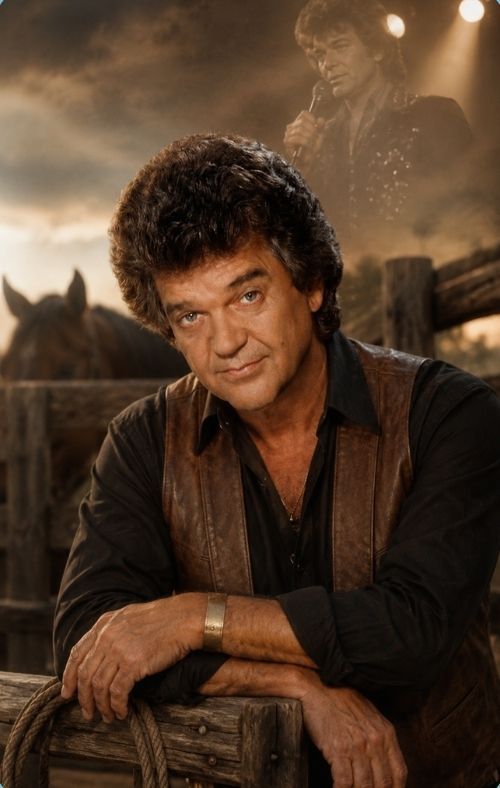
By 1986, Conway Twitty was on his 51st studio album — a career that had already run longer than most artists’ entire discographies combined. For almost any performer, reaching such a milestone would have been enough to justify slowing down, looking backward, or relying on familiar successes. Twitty, however, remained deeply interested in the emotional details that had always given country music its lasting power: loyalty, temptation, memory, regret, and the quiet promises that keep two people together through the years.
That enduring instinct could be heard clearly in “Fallin’ for You for Years,” a graceful song written by Mike Reid and Troy Seals. At its heart is a married couple whose affection remains so visible and convincing that outsiders misunderstand what they are seeing. The song takes an ordinary idea—two people continuing to choose one another—and presents it with the excitement usually reserved for a secret romance. Yet its real message is not about betrayal. It is about the rare and admirable ability to preserve warmth, admiration, and emotional closeness long after the wedding photographs have faded.
That distinction mattered, especially in Conway Twitty’s hands. Throughout his career, he possessed an unusual gift for making domestic emotions feel dramatic without making them artificial. His voice could turn a simple declaration into a confession and a familiar promise into something newly discovered. He did not merely sing about commitment as a moral responsibility. He made it sound alive, urgent, and worthy of attention.
Mike Reid and Troy Seals wrote “Fallin’ for You for Years” about a married couple still so devoted that strangers assume their relationship must be something forbidden. The idea carried a touch of irony because many of Twitty’s famous duet performances had explored emotional uncertainty, complicated loyalties, and conversations balanced carefully between affection and restraint. He understood how to suggest an entire history through a pause, a softened phrase, or the slight ache beneath a melody.

However, “Fallin’ for You for Years” offered something more reassuring. Instead of focusing on a relationship coming apart, it celebrated one that had survived. The couple in the song had not become strangers under the same roof. They still noticed one another. They still carried the spark of recognition that first brought them together. In an era when country songs often treated heartbreak as inevitable, this record argued that familiarity did not have to erase wonder.
The single reached No. 2 on the country chart, proving that listeners still responded strongly to Twitty’s mature interpretation of love and loyalty. It also became an important turning point: his final single before leaving Warner Bros. and returning to MCA, the label connected with some of the most celebrated chapters of his recording career. In that sense, the song stood at a crossroads, closing one professional period while confirming that Twitty’s emotional authority remained intact.
There is something almost defiant about the record when heard today. By his 51st album, Conway Twitty had nothing left to prove regarding endurance, popularity, or influence. Yet he continued searching for fresh ways to describe feelings that country music had examined for generations. He understood that devotion could be more than calm companionship. In the right song, it could still surprise the neighbors, confuse the strangers, and make an old promise sound newly spoken.

Fifty-one albums in, and Conway Twitty still knew how to make devotion sound like a scandal. That was not because he treated marriage lightly. It was because he understood its deepest possibility: after years of shared burdens and ordinary mornings, two people might still look at one another as though the story had only just begun.