Introduction
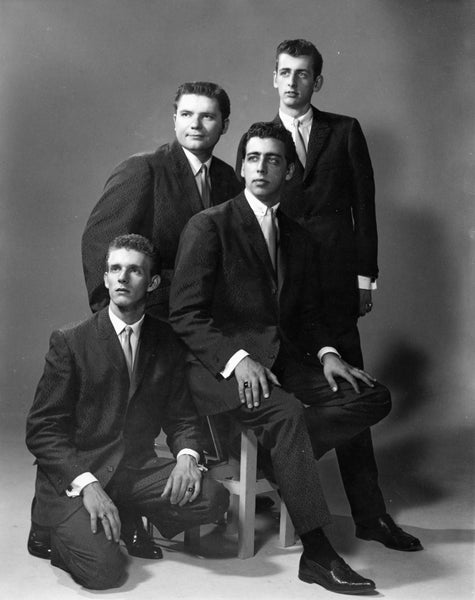
# **The Song That Made the World Stop and Listen: How “Flowers on the Wall” Secured The Statler Brothers’ Place in Country Music History**
**WHEN FOUR VOICES CHANGED EVERYTHING — HOW “FLOWERS ON THE WALL” TURNED THE STATLER BROTHERS INTO A NAME COUNTRY MUSIC COULD NEVER FORGET**
Some songs become successful because they perfectly match the sound of their time. Others achieve something far more remarkable: they sound unlike almost anything around them, yet audiences immediately recognize something familiar and deeply human within their words. **“Flowers on the Wall,” performed by The Statler Brothers**, belongs firmly in that second category.
Released during the mid-1960s, the song introduced listeners to a vocal group whose identity was built upon harmony, personality, and careful storytelling. Written by Statler Brothers member **Lew DeWitt**, “Flowers on the Wall” carried an unusual mixture of loneliness, humor, stubborn independence, and quiet sadness. Its narrator insists that he is perfectly content being alone, passing the hours by counting flowers on the wallpaper, playing solitaire, smoking cigarettes, and watching television. Yet beneath those almost comical details lies a truth that listeners understand immediately: this is a man trying very hard to convince both the world and himself that everything is fine.
That tension gives the song its lasting power.
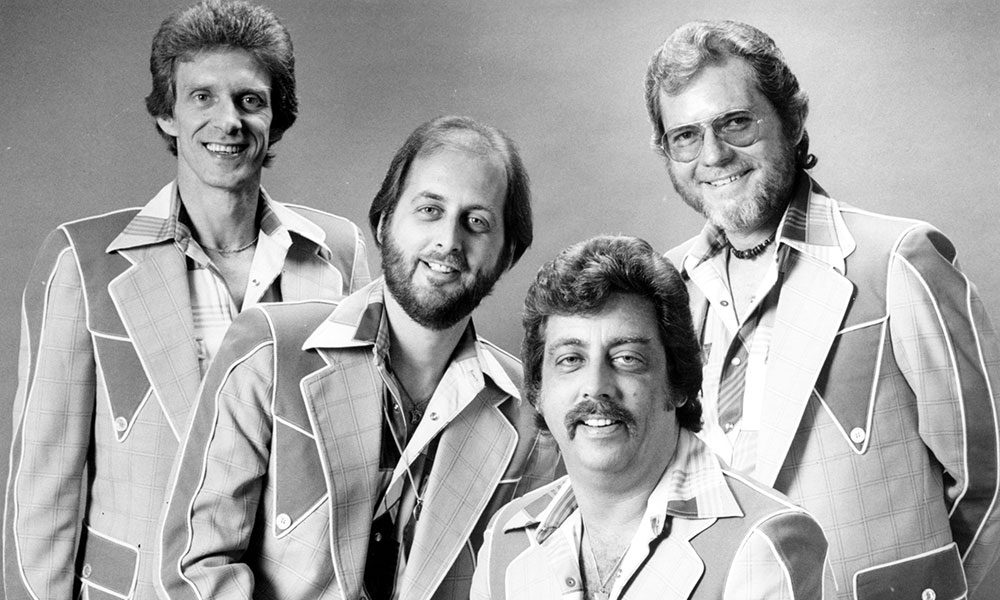
The Statler Brothers did not perform the number as though they were delivering a tragic confession. Instead, they allowed the wit of the lyric to stand beside its melancholy. Their harmonies remained controlled and polished, while the rhythm moved with an easy confidence that prevented the song from becoming overly sentimental. The result was a recording that could make audiences smile while quietly reminding them of moments when pride became a shield against disappointment.
For older listeners in particular, “Flowers on the Wall” may carry memories of a period when country music was expanding far beyond its traditional boundaries. The Statler Brothers had already gained valuable experience traveling and performing with **Johnny Cash**, but this song gave them a distinct identity of their own. They were no longer simply a talented harmony group standing near a famous headliner. They had created a sound and a story that demanded attention.
The arrangement was immediately recognizable. Deep bass notes provided a firm foundation, while the higher voices added brightness, precision, and movement. Each member contributed to a musical conversation in which no voice seemed unnecessary. That balance would become one of the group’s defining strengths. The Statler Brothers understood that harmony was not merely several people singing the same melody together. It was the art of allowing separate voices and personalities to create something larger than any individual part.
“Flowers on the Wall” also demonstrated that country music could be intelligent without becoming distant, humorous without losing emotional weight, and commercially successful without abandoning character. The song reached listeners who might not ordinarily have considered themselves country-music fans. Its appeal crossed musical boundaries because the feeling at its center was universal. Nearly everyone has experienced a period of isolation, disappointment, or wounded pride. Nearly everyone has pretended to be less affected than they truly were.
The narrator’s peculiar routine becomes more revealing with every line. Counting wallpaper flowers sounds amusing at first, but it also suggests a room that has grown too quiet. Playing solitaire implies not recreation but repetition. Watching television while insisting that companionship is unnecessary becomes less a declaration of freedom than a carefully maintained defense. The brilliance of the songwriting is that none of this needs to be explained directly. The listener hears the loneliness between the words.
That subtlety helped transform “Flowers on the Wall” from a clever novelty into an enduring classic.
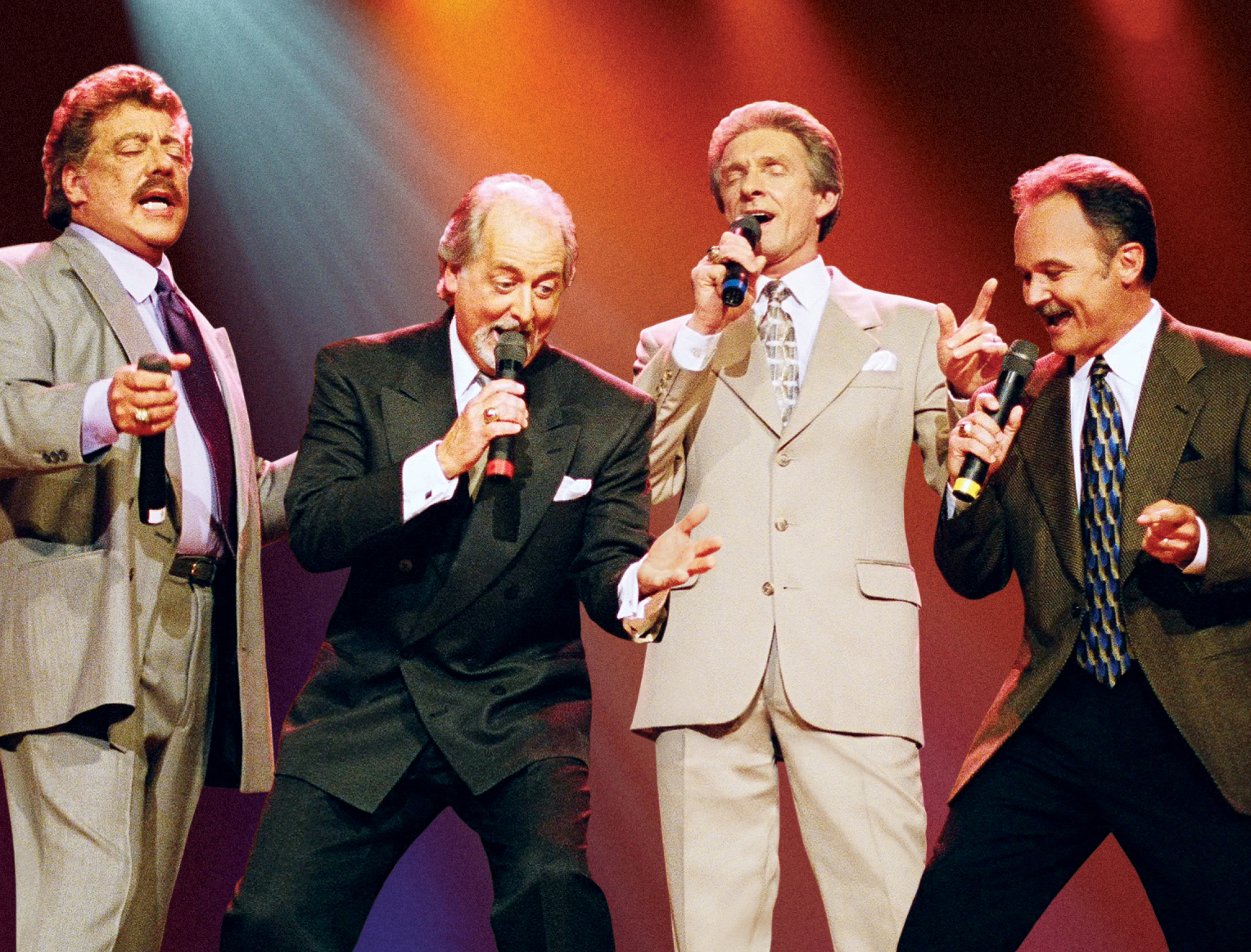
The song earned major recognition and became one of the recordings most closely associated with The Statler Brothers. More importantly, it established the qualities that would define their long career: memorable characters, sharply observed lyrics, gospel-influenced harmony, gentle humor, and profound respect for ordinary lives. Their later recordings would explore faith, family, memory, small-town America, aging, and the passage of time, but many of those strengths were already present here.
Decades later, the song still feels fresh because it never tells the audience exactly what to feel. Some listeners hear comedy. Others hear heartbreak. Many hear both at the same time. That emotional ambiguity reflects real life more honestly than a simple sad song ever could. People often laugh while carrying sorrow. They make jokes to avoid difficult conversations. They insist they are doing well when the silence around them says otherwise.
“Flowers on the Wall” captured that complicated emotional landscape in a few unforgettable minutes.
For The Statler Brothers, it was more than a hit record. It was the moment four distinctive voices stepped forward and announced that they had something original to offer. The harmonies were unmistakable, the lyric was unforgettable, and the personality of the group could no longer be overlooked.
Country music had heard many fine vocal groups before them. After “Flowers on the Wall,” however, the world knew exactly who The Statler Brothers were—and it would never forget their name.