Introduction

Fifteen Minutes, One Take, and a Country Masterpiece: How Gene Watson Made “Farewell Party” His Immortal Song
THE SESSION WAS ALMOST OVER. THE MUSICIANS DID NOT KNOW THE SONG, AND GENE WATSON HAD ONLY ENOUGH TIME TO SHOW THEM THE CHORDS. FIFTEEN MINUTES LATER, “FAREWELL PARTY” WAS FINISHED.
Some of country music’s greatest recordings are carefully assembled over many hours, shaped through repeated takes, detailed arrangements, and countless technical adjustments. Yet every so often, a performance arrives almost by accident—unplanned, unpolished, and so emotionally complete that any attempt to improve it might only diminish its power. Gene Watson’s recording of “Farewell Party” belongs to that rare category.
Before Nashville recognized the extraordinary voice that would eventually make him one of traditional country music’s most respected singers, Watson lived the life of an ordinary working man. During the day, he repaired damaged automobiles in a Houston body shop. At night, he performed in Texas clubs, singing for audiences who valued sincerity more than celebrity. He recorded for small regional labels, gradually building a loyal following without abandoning the practical world that had shaped him.
That background mattered. Watson did not approach country music as a fashionable career move or a pathway to glamour. He understood hard work, disappointment, responsibility, and the quiet pride of people who continued moving forward even when life offered them little recognition. Those experiences could be heard in his voice long before national audiences knew his name.
Even after “Love in the Hot Afternoon” reached the Top Five in 1975, Watson remained closely connected to the values of working musicians. His singing was technically remarkable, but it never sounded calculated. He possessed a wide vocal range, yet he understood that the deepest emotion does not always come from singing louder. Often, it comes from holding something back.
That gift became unmistakable during the recording of the 1978 album Reflections.
Near the end of a studio session, there was enough time remaining to attempt one more song. Watson selected “Farewell Party,” a sorrowful composition written and first recorded by Lawton Williams. Other respected artists—including Little Jimmy Dickens, Johnny Bush, and Waylon Jennings—had already recorded it. The song was not new, and no one in the room could have known that Watson was about to create the version by which all others would be judged.
There was one immediate difficulty: the studio musicians did not know the arrangement.
With the session clock running, Watson knelt with his guitar and quickly demonstrated the chords to the band and backing singers. There was no opportunity to examine every phrase or construct the performance through repeated rehearsals. The musicians followed his direction, the tape began to roll, and within approximately fifteen minutes, the recording was complete.
What emerged from that hurried session did not sound hurried at all.
From the opening lines, Watson sings with remarkable control. His voice begins low, measured, and almost conversational, as though the narrator is attempting to discuss an unbearable subject without losing his dignity. The melody then rises gradually, demanding increasingly difficult notes while the emotional pressure continues to build.
Watson could easily have treated those high passages as a vocal exhibition. Instead, he made them sound like the natural breaking point of a man trying not to break.
That restraint is the secret of “Farewell Party.”
The song imagines the singer’s own funeral and wonders whether the woman who no longer loves him will attend. It is a severe and haunting idea, but Watson never turns it into melodrama. He does not beg the listener for sympathy. He simply allows the words to unfold, giving each line enough room to reveal its sadness.
The performance grows more powerful because he delays the emotional release. Listeners can hear the effort required to remain composed. By the time his voice reaches the song’s soaring climax, the high notes feel less like decoration and more like grief finally escaping the boundaries placed around it.
Released as a single in 1979, “Farewell Party” reached No. 5 on Billboard’s country chart. Yet its importance cannot be measured by chart position alone. Several of Watson’s recordings achieved comparable or greater commercial success, but few became so completely connected to his identity.
Audiences requested it at nearly every concert. Watson eventually named his touring musicians the Farewell Party Band, transforming the title of one recording into a permanent symbol of his career. More importantly, the song established him as what musicians often call a “singer’s singer”—an artist whose ability is most deeply appreciated by those who understand how difficult such singing truly is.
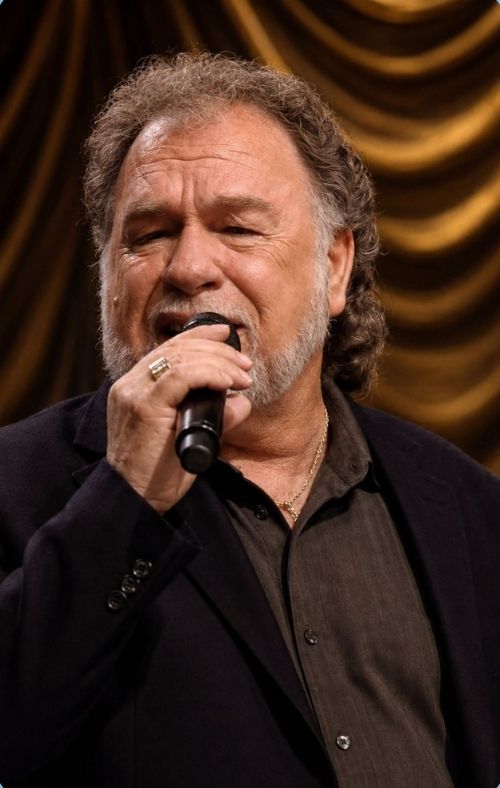
Many performers can reach impressive notes. Fewer can make those notes carry experience, discipline, and emotional truth.
For generations of younger country singers, “Farewell Party” became a test. They could study Watson’s phrasing, imitate the arrangement, and attempt the demanding climb of the melody. But the song always revealed the difference between merely possessing a strong voice and knowing how to use it.
Gene Watson did not conquer the song by overpowering it. He respected its silence, its sorrow, and its dignity.
That is why a recording completed in roughly fifteen minutes has endured for decades. It captured something that cannot be manufactured through technology or endless rehearsal: a gifted singer meeting the right song at precisely the right moment.
“Farewell Party” became more than Gene Watson’s signature performance. It became a standard against which traditional country singing could be measured—a reminder that the greatest voices do not simply display pain.
They carry it.