Introduction
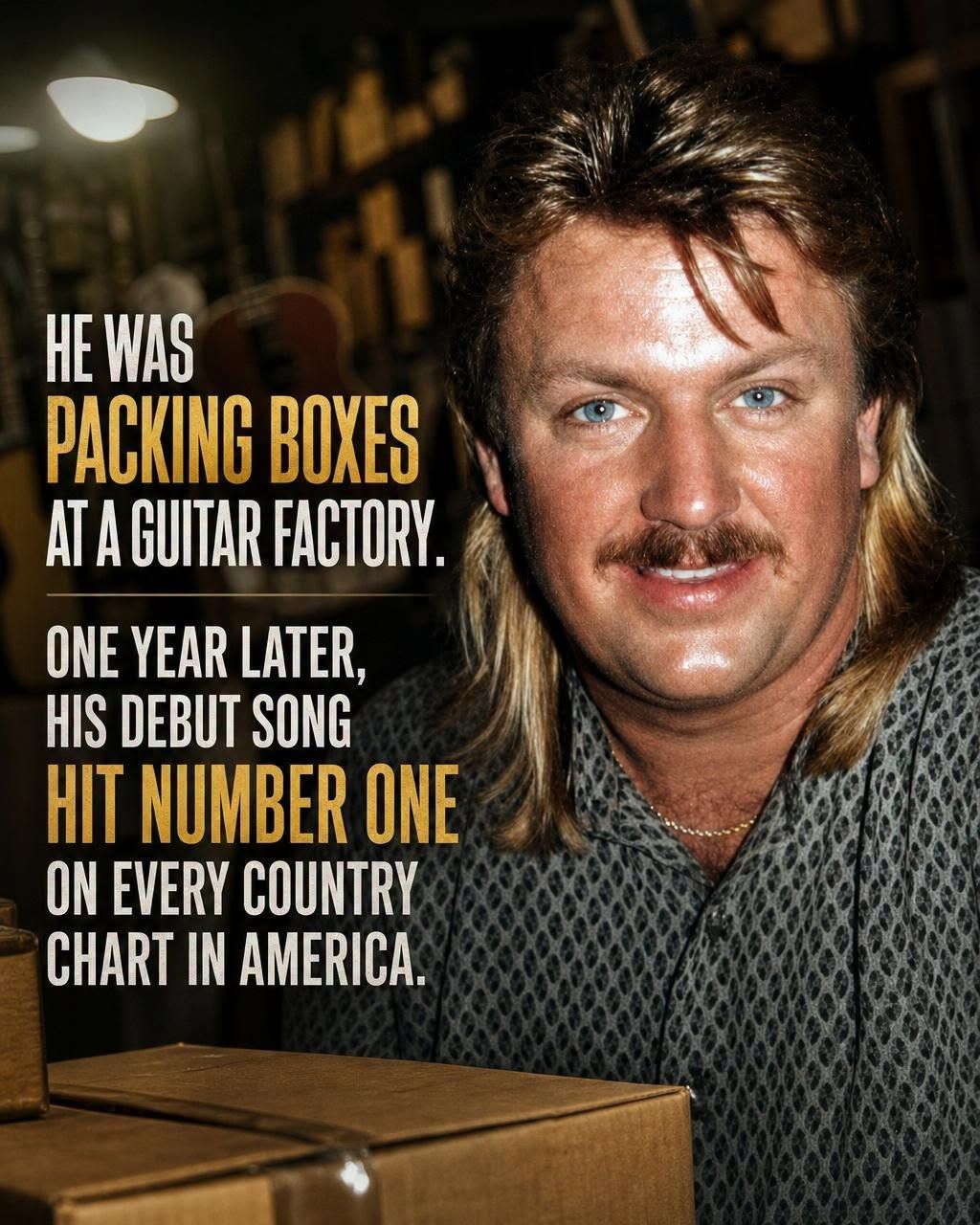
HE WAS PACKING BOXES AT A GUITAR FACTORY. 1 YEAR LATER, HIS DEBUT SINGLE TOPPED EVERY COUNTRY CHART IN AMERICA. That sentence sounds almost too perfect to be true, the kind of line Nashville might invent after the fact to make a legend seem even more dramatic. But in Joe Diffie’s case, it was the plain truth. Before the awards, before the hit records, before that unmistakable voice became one of the defining sounds of 1990s country music, Diffie was simply trying to survive. He had known disappointment, uncertainty, and the heavy silence that comes when life does not turn out the way a man hoped it would.
On December 8, 1989, Joe Diffie walked into The Bennett House in Franklin, Tennessee, not as a star, but as a working man carrying a voice that had waited patiently for its moment. The studio itself had history in its walls, a Victorian mansion turned recording space, the kind of place where a song could feel less manufactured and more discovered. For Diffie, that night was not about image, spectacle, or celebrity. It was about standing in front of a microphone and singing a song that understood something deep about ordinary people.

“Home” was not built on flash. It did not need it. The song carried a gentle ache, a quiet dignity, and a message that felt instantly familiar: home is not always just a house, a town, or a front porch. Sometimes it is a memory. Sometimes it is a voice you miss. Sometimes it is the part of yourself you try to hold onto after life has taken you far from where you began. Diffie sang it with the kind of sincerity that cannot be borrowed. You could hear the miles in his tone, the heartbreak beneath the calm, and the humility of a man who knew what it meant to start over.
That is why the success of “Home” still matters. When it became the first debut single ever to reach No. 1 on all three major country charts — Billboard, Gavin, and Radio & Records — it was not just a commercial victory. It was a statement. Country radio had heard something real. Listeners had heard a man who sounded like he had lived every word. In an industry often shaped by timing, marketing, and polish, Joe Diffie arrived with no music video, no flashy introduction, and no elaborate campaign. The label made the remarkable choice to let the voice speak first.

And what a voice it was. Warm, clear, emotional, and unmistakably country, Diffie’s singing had the rare ability to sound both powerful and personal. He could make a listener feel as though he was singing across a crowded room, not from a distant stage. “Home” introduced him not as a manufactured newcomer, but as a fully formed storyteller, someone who understood the emotional language of working people, broken dreams, family memories, and second chances.
For older country fans, especially those who remember hearing “Home” when it first came across the radio, the song represents more than Joe Diffie’s beginning. It represents a moment when country music still had room for a voice to rise from real life and change everything. No gimmick. No noise. Just a man, a song, and a truth that found its way into millions of hearts.
Joe Diffie’s journey from packing boxes at Gibson Guitar to making country music history remains one of the genre’s most moving reminders that talent does not always arrive wearing a spotlight. Sometimes it walks in quietly, carrying its own scars, waits for the right song, and then sings so honestly that the whole country finally turns to listen.