Introduction
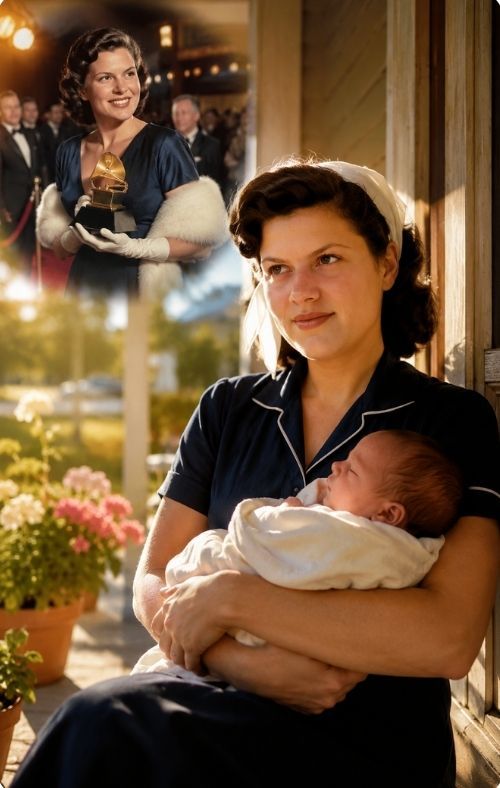
THE GRAMMYS DIDN’T JUST OVERLOOK PATSY CLINE. THEY NEVER EVEN SAID HER NAME ONCE WHILE SHE WAS ALIVE.
There are moments in music history that become difficult to explain with the passage of time. The greater an artist’s legacy becomes, the more unbelievable it seems that the industry once failed to recognize their brilliance. Few stories illustrate that contradiction more clearly than the story of Patsy Cline. Today, her voice is considered one of the most influential in American music. Her recordings continue to inspire singers across generations, her albums remain treasured by fans around the world, and her name is spoken with the same reverence reserved for the greatest legends in country music. Yet during her lifetime, one of the music industry’s highest honors barely seemed to notice she existed.
It is almost impossible for modern listeners to imagine. Between 1961 and 1963, Patsy Cline recorded a remarkable series of songs that would eventually become pillars of American popular music. “I Fall to Pieces” transformed her into a national star. “Crazy,” written by Willie Nelson, became one of the most celebrated recordings in country music history. “She’s Got You” further demonstrated her unmatched ability to blend heartbreak, strength, and elegance into a single performance. These songs were not simply country hits. They crossed boundaries and reached audiences far beyond traditional country radio.
At a time when the divide between country and pop music was still significant, Patsy was helping to build a bridge. Her recordings appealed to listeners who had never before paid attention to country music. Her polished vocal style, emotional depth, and unmistakable tone made her one of the most distinctive artists of her generation. Yet while audiences embraced her, the Grammy Awards offered no nominations. Not one.
To understand the context, it is important to remember that the Grammy Awards were still in their infancy. The Recording Academy had only recently begun recognizing musical achievement, and country music occupied a very small corner of the awards landscape. There was only a limited number of categories available to country artists, and the institution had not yet developed the broader understanding of country music that exists today. Even so, many historians and fans continue to ask the same question: how could a voice as extraordinary as Patsy Cline’s fail to earn even a single nomination?

The question becomes even more striking when viewed through the lens of history. Her influence would eventually prove far greater than many artists who were celebrated during those same years. Long after trends faded and chart positions were forgotten, Patsy Cline’s recordings continued to resonate. New generations discovered her music and found the same emotional honesty that captivated listeners in the early 1960s. Her performances felt timeless because they were built on something deeper than fashion or popularity. They were built on truth.
Then came the tragic day that forever altered country music history.
On March 5, 1963, Patsy Cline boarded a small aircraft piloted by Randy Hughes. Earlier that day, weather conditions had raised concerns. Reports indicated that visibility was poor and conditions were deteriorating. Despite warnings, the flight continued. Just twenty-two minutes after departing following a refueling stop, the plane crashed near Camden, Tennessee. The accident claimed the lives of everyone on board. Patsy Cline was only thirty years old.
The loss stunned the music world. Fans struggled to comprehend how a career filled with so much promise could end so suddenly. Yet what happened after her death only deepened the sense that the world had not fully understood what it had lost.
In the years that followed, her reputation grew rather than faded. Her Greatest Hits album, released several years after the crash, became one of the most successful compilation albums ever issued by a female artist. It sold millions of copies and remained on the charts for an astonishing length of time. Decades passed, and listeners continued to purchase, stream, and celebrate the music she left behind. What had once seemed like a promising career became a cultural legacy.
Recognition eventually arrived. In 1973, Patsy Cline became the first solo female artist inducted into the Country Music Hall of Fame. The honor acknowledged what fans had known for years: her contributions had fundamentally changed the course of country music. Later, in 1995, the Recording Academy awarded her a Grammy Lifetime Achievement Award. It was a meaningful gesture, but it arrived thirty-two years after her death.

Perhaps that is why the story continues to resonate today. Awards matter, but they are not always perfect measures of greatness. Sometimes institutions move too slowly. Sometimes history sees what contemporary observers miss. Patsy Cline’s journey reminds us that true artistic impact cannot always be measured by trophies or nominations.
There is also the lingering mystery surrounding her final day. Friends later recalled conversations she had before boarding the flight, including remarks that have become part of country music folklore. One particular exchange with fellow country star Dottie West has been repeated for decades because of how haunting it seems in retrospect. Whether viewed as intuition, coincidence, or simply the recollection of a difficult day, the story continues to leave listeners silent whenever it is told.
More than sixty years later, the debate remains relevant. Was Patsy Cline overlooked because of the limitations of her era? Was country music itself undervalued by major institutions at the time? Or does her story reveal a larger truth about the music industry—a reminder that extraordinary talent is not always recognized when it deserves to be?
Whatever the answer may be, one fact remains undeniable. The Grammys eventually honored Patsy Cline, but the world honored her first. Her voice outlived every omission, every oversight, and every missed opportunity. Today, when listeners hear “Crazy,” “I Fall to Pieces,” or “She’s Got You,” they are reminded that greatness does not wait for recognition. Sometimes greatness simply endures until history catches up.