Introduction
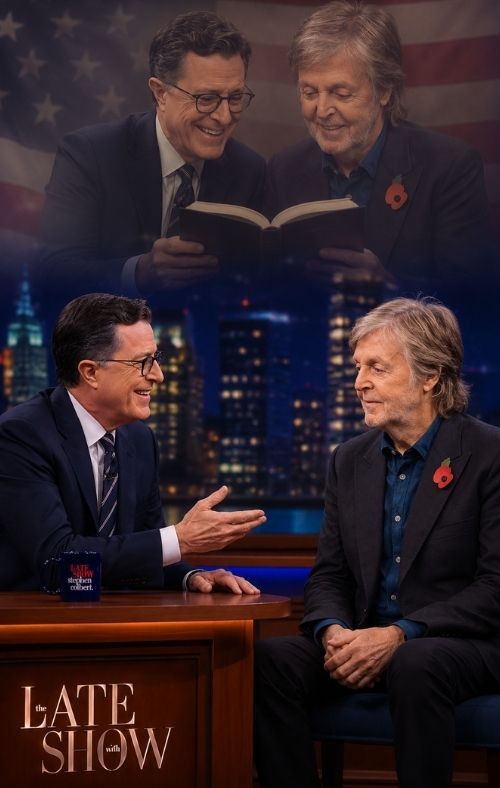
55,600 FANS SCREAMING SO LOUD THE BAND COULDN’T HEAR A SINGLE NOTE THEY PLAYED.
There are stories in popular music that grow larger with every passing decade, not because they are exaggerated, but because they seem almost impossible to believe. The Beatles at Shea Stadium is one of those stories. For anyone who remembers the 1960s, or for anyone who has studied the cultural force of that era, the image remains extraordinary: four young men standing on a baseball field, surrounded by a roar so overwhelming that music itself nearly disappeared beneath it.

When Paul McCartney sat across from Stephen Colbert and calmly recalled, “We couldn’t hear ourselves,” he was not offering a dramatic metaphor. He was describing the strange reality of a night when fame had become louder than sound. The band had 100-watt amplifiers, modest by modern concert standards, and they were facing more than fifty-five thousand voices erupting in a kind of mass emotion that few artists in history have ever experienced. The screaming was not background noise. It was the event.
That is what makes Paul’s memory so powerful. He did not speak with resentment. He did not present the night as a musical failure. Instead, he smiled, because he understood that Shea Stadium was never only about perfect notes or flawless timing. It was about the moment when The Beatles stopped being merely a band and became a shared language for an entire generation.
Ringo Starr could not properly hear the guitars. He had to watch John Lennon and Paul McCartney’s movements just to follow the song. That detail says more than any polished concert review ever could. These were musicians at the center of a historic storm, relying not on monitors or technical precision, but on instinct, friendship, and the invisible rhythm they had built together through years of performing side by side.
And then, on Colbert’s couch, Paul offered that little Beatle headshake and a quick “woo,” and suddenly the past came alive again. For older viewers, it was more than nostalgia. It was a reminder of youth, of black-and-white television, of records spinning in living rooms, of a time when music seemed capable of changing the temperature of the world.
But the most moving part is what Paul did not emphasize. He did not focus on the chaos, the equipment, or even the songs. He remembered the feeling. He remembered the human wave in front of him. That is why the story still matters. At Shea Stadium, The Beatles may not have heard themselves — but the world heard them forever.