Introduction
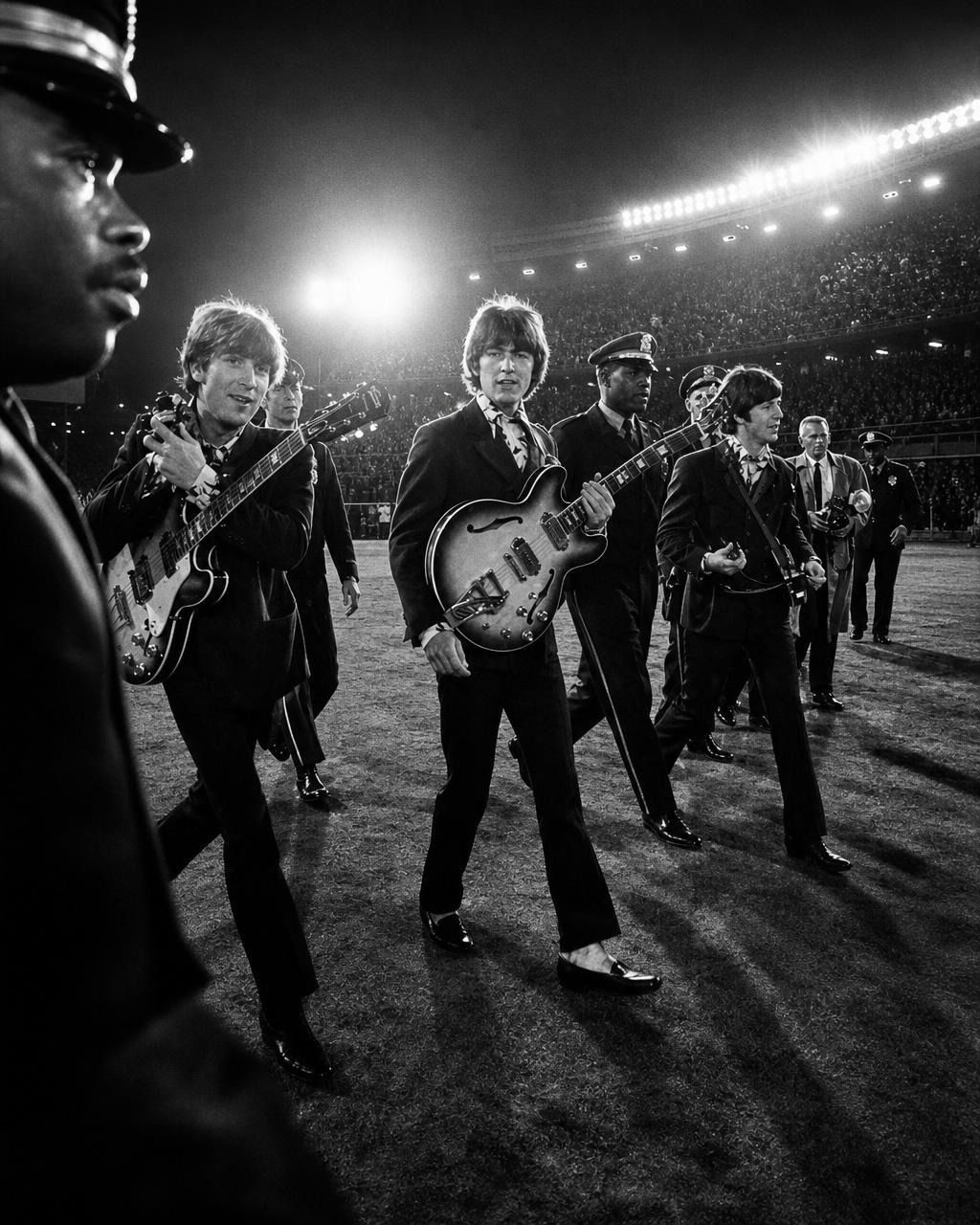
ONLY ONE PHOTOGRAPHER WAS ALLOWED BACKSTAGE THAT NIGHT. THIS IS WHAT HE SAW.
Some nights in music history do not announce themselves as historic while they are happening. They arrive quietly, wrapped in ordinary details: cold air, tired faces, half-empty seats, paper cups, cigarette smoke, and musicians waiting in a locker room before walking into the noise. August 29, 1966, at Candlestick Park in San Francisco was one of those nights.
To the crowd, it was another Beatles concert. To the city, it was a major event, but not necessarily a farewell. The fans who bought tickets that evening did not know they were witnessing the end of something no one could ever recreate. They were watching the Beatles’ final concert tour come to its last public stop. Not a pause. Not a break. The end.
That is what makes Jim Marshall’s photographs so powerful. He was not simply taking pictures of famous men before a performance. He was documenting the last hours of an era while almost nobody understood what was ending. As the only photographer granted full access that day, Marshall followed the Beatles from arrival to backstage, from the quiet private spaces to the exposed walk across the infield dirt. His camera saw what the crowd could not.
Backstage, the images reveal a very different Beatles from the smiling figures seen on album covers and television screens. They appear tired, guarded, almost emotionally removed from the spectacle surrounding them. There is tea, smoke, casual doodling, waiting, and silence between moments. These are not images of men celebrating conquest. They are images of four young artists carrying the weight of a phenomenon that had grown larger than any human being could comfortably hold.
For older listeners and longtime Beatles admirers, that contrast is deeply moving. The public remembers the screams, the flashbulbs, the records, and the cultural revolution. But Marshall’s backstage photographs point toward something quieter: exhaustion, uncertainty, and the strange loneliness that can exist at the very center of fame. The Beatles were still young, but they had already lived through a pressure few performers could imagine.
Candlestick Park itself adds to the atmosphere. The cold, foggy San Francisco evening, the wind, the dust across the baseball field, and the empty sections of seats all give the night a haunting quality. It was not a grand, perfect goodbye staged for history. It was imperfect, chilly, and strangely human. That may be why it feels so unforgettable now.
The new collection of Marshall’s photographs matters because it does more than preserve images. It reopens a moment that has been spoken about for decades, but not always truly seen. Proof sheets, unpublished frames, backstage pauses, and the walk toward the field all help us understand that the Beatles’ final concert was not only a musical event. It was a turning point in the life of popular culture.
Sixty years later, those photographs still feel as though they are holding something back. Perhaps that is because they capture a truth no caption can fully explain: history often looks ordinary before we know what it has taken from us. On that night in 1966, the Beatles walked toward the stage as if they were simply finishing another show. In reality, they were walking out of one world and into legend.